Kazuo Inamori and Japan Airlines Turnaround: A Masterclass in Legacy-Led Management

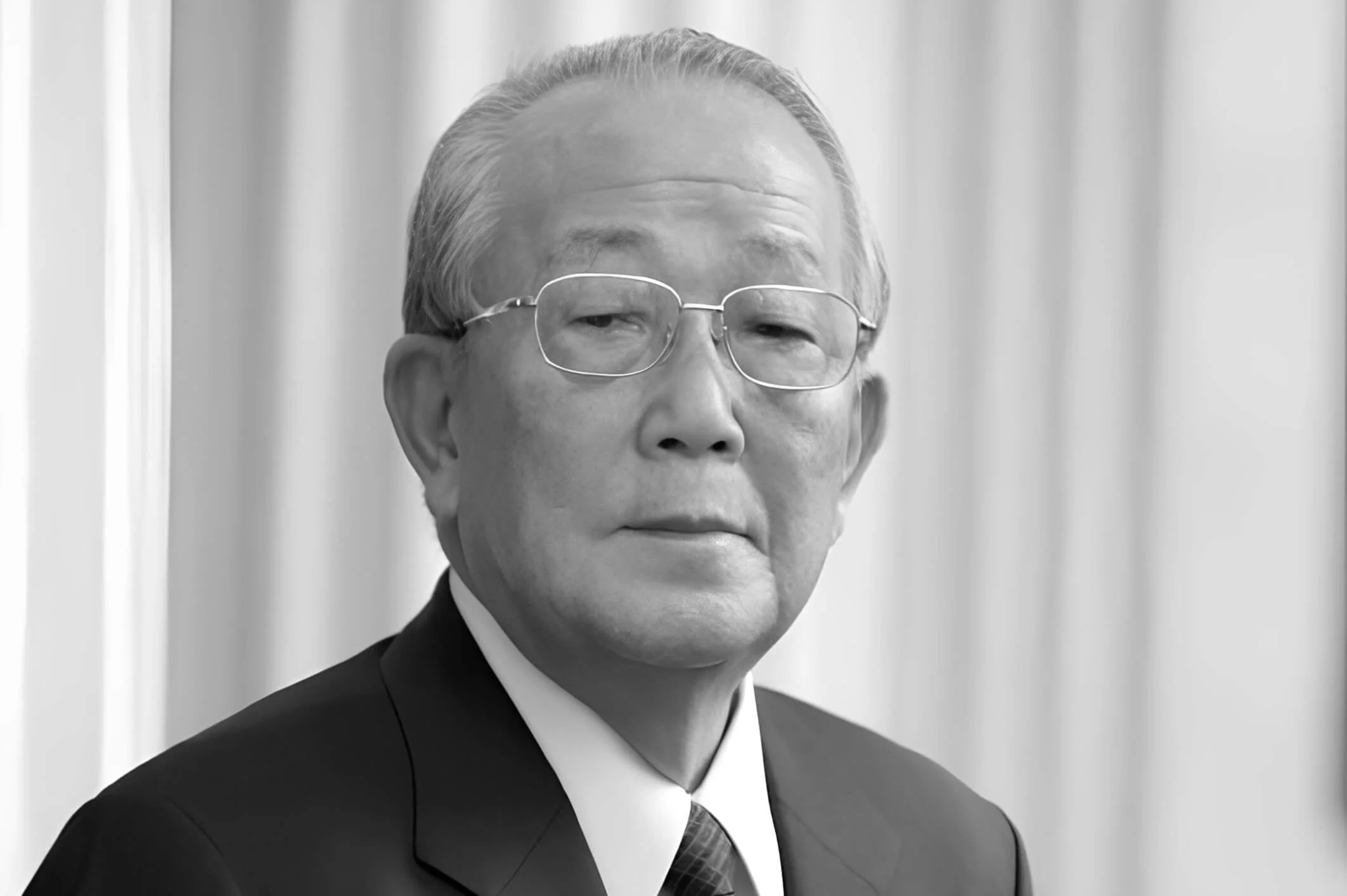
Kazuo Inamori (1932–2022), former Chairman of Japan Airlines, and founder of Kyocera and KDDI

In January 2010, Japan Airlines filed for bankruptcy. It was the largest non-financial corporate failure in Japanese history since the end of the Second World War, carrying ¥2.3T ($25B) in liabilities.

The stakes were national. JAL operated Japan's flagship international routes, employed over 47,000 people, and had already been bailed out by the government three times in the preceding decade. A failed restructuring would have been a national embarrassment. The Japanese government asked a 77-year-old retired industrialist, with no experience in airlines, to take the helm: Kazuo Inamori.

Inamori had built two Fortune Global 500 companies from nothing: Kyocera Corporation, a global leader in advanced ceramics, and KDDI, Japan's second-largest telecommunications carrier. Interestingly, he was also an ordained Zen Buddhist priest.

Within less than three years, JAL became the most profitable airline in the world, posting a record operating profit of ¥188.4B ($2.35B), and relisted on the Tokyo Stock Exchange in the second-largest IPO globally that year, just after Facebook, for $8.5B. The speed and scale of the turnaround remain virtually without precedent.

How did Inamori's intervention succeed where conventional restructuring had repeatedly failed?

A business leadership story about the power of placing meaning at the center of how a business is run.
Listen to a discussion inspired by this article on the Glenshore Perspectives podcast.

Subscribe on Apple | Spotify

The Business Leader

Kazuo Inamori was born in the 1930s in Japan and studied applied chemistry before taking a research position at Shofu Industries, a ceramics manufacturer in Kyoto. Frustrated with the company's rigid hierarchy and indifference to his research's commercial potential, he and seven colleagues left to start their own company.

In 1959, Inamori founded Kyoto Ceramic Co, later renamed Kyocera Corporation, with ¥3M (roughly $8,000 at the prevailing exchange rate) in capital from acquaintances. The company manufactured precision ceramic components used inside television picture tubes, and as color television proliferated across Japan in the 1960s, demand surged. Kyocera expanded into semiconductors, solar cells, and electronics, growing into a multinational with over 77,000 employees and annual revenues exceeding $13B. It has never recorded an annual loss.

In 1984, when Japan deregulated its telecommunications industry, Inamori founded DDI Corporation to challenge NTT, the state telecoms monopoly. DDI merged with KDD (Kokusai Denshin Denwa, Japan's international telecom carrier) and IDO (Nippon Idou Tsushin, a mobile operator) in 2000 to form KDDI, which became Japan's second-largest telecom operator.

Early on, way before success, Inamori developed a distinctive management philosophy. When Kyocera had fewer than 100 employees, he wrote the company's Management Rationale, the foundational document governing the company's operations. It stated its purpose as follows: "To provide opportunities for the material and intellectual growth of all our employees, and through our joint efforts, contribute to the advancement of society and humankind."

From this philosophy emerged the Amoeba Management System, which Inamori began developing in the mid-1960s as Kyocera outgrew his ability to oversee every operation personally. The system divides an entire organization into the smallest possible autonomous units, an "amoeba." Each functions as an independent profit-and-loss center, setting monthly revenue and cost targets, tracking performance daily using a metric called "Hourly Efficiency" (added value divided by total labor hours), and transacting with other amoebas at internally negotiated prices pegged to external market rates. Every unit understands its own economics and has the autonomy to act. The core principle was that every individual must think and act as if they were the owner of their own small business: every employee is a manager, every department is a business, every decision has a visible financial consequence. The whole organization becomes self-correcting.

This combination of moral philosophy and forensic financial accountability was the essence of Inamori's management system. It was taught at the Seiwajyuku academy he founded in 1983, and adopted by over 400 companies worldwide, across manufacturing, healthcare, and services sectors from China to the United States.

In 1997, Inamori retired from active management at Kyocera, taking the title of honorary chairman, and was also ordained as a Zen Buddhist priest.

The Company

Japan Airlines was founded in 1951 as a government initiative to rebuild Japan's air transport system after the Second World War. It became the state-owned national carrier in 1953 and was privatized in 1987. At its peak, JAL operated Japan's flagship international routes, carried over 52 million passengers annually.

By the 2000s, JAL had accumulated structural weaknesses across every layer of the business: an oversized fleet of fuel-inefficient Boeing 747s maintained as competitors shifted to smaller aircraft, politically mandated loss-making regional routes, an expensive senior workforce hired during the 1970s boom, and a diversification into hotels, golf courses, and real estate that collapsed with Japan's asset bubble in the late 1980s. The 2008 financial crisis pushed it past the point of no return.

In January 2010, JAL filed for bankruptcy under Japan's Corporate Rehabilitation Law, still employing over 47,000 people. It was the largest non-financial corporate failure in Japanese postwar history. The airline owed ¥2.3T ($25B) in total liabilities against assets worth roughly ¥1.5T ($17B), leaving a shortfall of over ¥800B ($9B). The government directed the Enterprise Turnaround Initiative Corporation of Japan (ETIC), a state-backed restructuring body, to manage the process as court-appointed trustee. ETIC imposed severe preconditions: elimination of one-third of the workforce (reducing headcount to approximately 32,000), salary cuts of up to 30%, retirement of inefficient aircraft, and withdrawal from underperforming routes. Creditors agreed to forgive ¥521.5B ($6B) in debt, absorbing a significant portion of the shortfall. JAL's shares were delisted from the Tokyo Stock Exchange in February 2010, and then ETIC injected ¥350B ($4B) in fresh public capital to fund the restructured airline.

The Decision

ETIC's leadership, particularly its former chairman Hideo Seto, understood that the airline's problems were embedded in a corporate culture that had operated for decades as a semi-governmental bureaucracy. The government needed someone who could change not just the numbers, but the people behind them.

Seto and the government turned to Inamori, who was 77 and had been retired for over a decade. Those around him advised strongly against it, and he resisted multiple requests. He eventually agreed, motivated by three considerations he later explained publicly: preventing the economic damage a second JAL bankruptcy would inflict on Japan, protecting the livelihoods of the remaining employees, and preserving competitive balance in Japanese aviation so that consumers would not be left with a single dominant carrier. He accepted the chairmanship and declined any salary, as a signal to a workforce that had just lost a third of its colleagues. Inamori wanted every remaining employee to understand that he had no financial interest in the outcome, only a sense of responsibility.

The Intervention

His first priority was to establish a shared philosophical foundation. He adapted the Kyocera Philosophy into what became the JAL Philosophy, a set of principles governing employee conduct centered on the primacy of employee wellbeing and the moral obligation to serve customers and society. Senior executives were gathered in what Inamori termed a "dojo," a training hall, and subjected to intensive seminars. The response was initially skeptical. One executive publicly argued with Inamori about whether an airline's purpose was to turn a profit or merely provide a public service. Others could not believe that a man of his wealth and age would devote time to such granular, almost pastoral work. Yet the granularity was the point. Inamori spent time on hangar floors and behind ticket counters, repeating his message directly to frontline staff.

Simultaneously, he transplanted the Amoeba Management System into the airline. JAL's bureaucracy was disaggregated into small, self-governing units. For the first time in JAL's history, profitability data for individual routes and individual flights became available the following day. Inamori scrutinized departmental figures personally every month. If a unit showed no improvement, he demanded to know why.

The effect was transformative. Under the old regime, no executive had material interest in management figures. Aircraft deployment decisions were made centrally, often resulting in 200-seat planes flying routes with 20 passengers. Under the Amoeba system, unit leaders could scale down to smaller planes with a single phone call, because they now understood the cost of every empty seat and had the authority to act. Hierarchy was dismantled. Monthly meetings required each unit to present its figures and explain variances. There was no more hiding poor performance within a rigid reporting chain.

The Outcome

The measurable results were extraordinary. JAL's operating performance swung from a loss of ¥133.7B ($1.5B) in fiscal year 2009 to a record operating profit of ¥188.4B ($2.35B) in fiscal year 2011, a turnaround exceeding ¥320B ($4B) in two years. Net profit reached ¥187B ($2.3B), more than 6x that of rival All Nippon Airways (ANA) at ¥28B ($350M). ETIC's original recovery plan had targeted ¥60B ($750M) in operating profit. JAL delivered more than three times that figure. On 19 September 2012, two years and eight months after filing for bankruptcy, JAL relisted on the Tokyo Stock Exchange. The ¥663B ($8.5B) offering was the second-largest IPO globally that year, behind only Facebook. ETIC, which had held approximately 96% of JAL's equity, divested its entire stake, fully recouping the ¥350B ($4B) in public funds it had invested.

JAL's recovered profitability was not produced solely by Inamori's cultural transformation. The bankruptcy process itself had given the airline structural advantages its competitors did not enjoy: over ¥500B ($6B) in debt forgiven by creditors, lower depreciation charges from asset write-downs, and tax credits from accumulated losses that sheltered profits for years. The Liberal Democratic Party publicly opposed the relisting, and rival ANA argued that JAL had gained an unfair competitive advantage through its government bailout. These criticisms were not trivial: the financial restructuring created conditions that would have improved any airline's reported earnings, regardless of who was running it.

But what the financial restructuring could not explain was the scale of the outperformance. ETIC's own recovery plan, which already assumed the benefits of debt forgiveness and asset write-downs, had projected ¥60B ($750M) in operating profit. JAL delivered ¥188B ($2.35B). The gap between what the restructuring alone should have produced and what JAL actually achieved is the measure of what Inamori's intervention added.

Inamori stepped down as chairman in February 2012.

Reflections for Business Leaders

JAL before Inamori was an organization that possessed the information it needed to save itself. Route-level cost data existed. Operational inefficiencies were visible to anyone who looked. But it could not act on it. The problem was the absence of any mechanism to connect that information to individual behavior. In their 1990 paper in Administrative Science Quarterly, organizational theorists Wesley Cohen and Daniel Levinthal called this condition a failure of "absorptive capacity": the inability of an institution to recognize the value of information it already holds and apply it to commercial ends. Their research focused on R&D-intensive firms, but the mechanism is the same. An organization that has spent decades insulated from market consequences can lose the internal wiring needed to process signals that would be obvious to an outsider.

Inamori restored that capacity through two simultaneous mechanisms. The first was philosophical: by redefining JAL's purpose around employee wellbeing and societal service, he gave individuals a reason to care about outcomes they had previously ignored. A pilot or gate agent who sees themselves as serving a meaningful mission engages differently from one who sees themselves as a cog in a bureaucracy. The second was structural: the Amoeba Management System made the financial consequences of every decision visible, immediate, and personal. Each mechanism depended on the other: purpose without financial transparency produces enthusiasm without results; transparency without purpose produces local optimization and gaming. The results were not a happy accident of idealism. They were the measurable consequence of a management model that most boardrooms would have dismissed before it had a chance to prove itself.

The broader lesson extends well beyond distressed situations. Any business leader building an organization intended to outlast their own involvement faces the same question Inamori answered at JAL: how do you create a system where performance is generated by the people inside it, not imposed on them from above? Inamori's answer was to pair radical financial transparency with a shared sense of genuine purpose.

Kazuo Inamori died in 2022 in Kyoto, at the age of 90. He founded two Fortune Global 500 companies from scratch, and achieved a corporate turnaround unique in its speed and scale, saving an airline, 32,000 jobs, and $4B in public funds. The essential question his life's work poses to every business leader is deceptively simple: do your people know, every day, what their work costs and what it earns, and do they have a reason to care?

Amine Laouedj Managing Director, Glenshore

I advise responsible business leaders who wish to ensure their company ends up in the right hands and continues to flourish after their exit. If these perspectives resonate with your thoughts, I welcome a conversation. Please connect or message me on LinkedIn.

Glenshore is a boutique investment bank with the Succession M&A Playbook, a disciplined approach to align financial outcomes with long-term mission and legacy preservation. Learn more at glenshore.com.


Disclaimer: The analysis contained herein reflects publicly available information as of February 2026. All data points are sourced from official Kyocera and JAL corporate disclosures, ETIC restructuring records, Tokyo Stock Exchange filings, and referenced third-party research including Cohen and Levinthal (1990). No proprietary or non-public information has been used.
George Lucas and Lucasfilm Succession: A Cautionary Tale of Mergers and Acquisitions

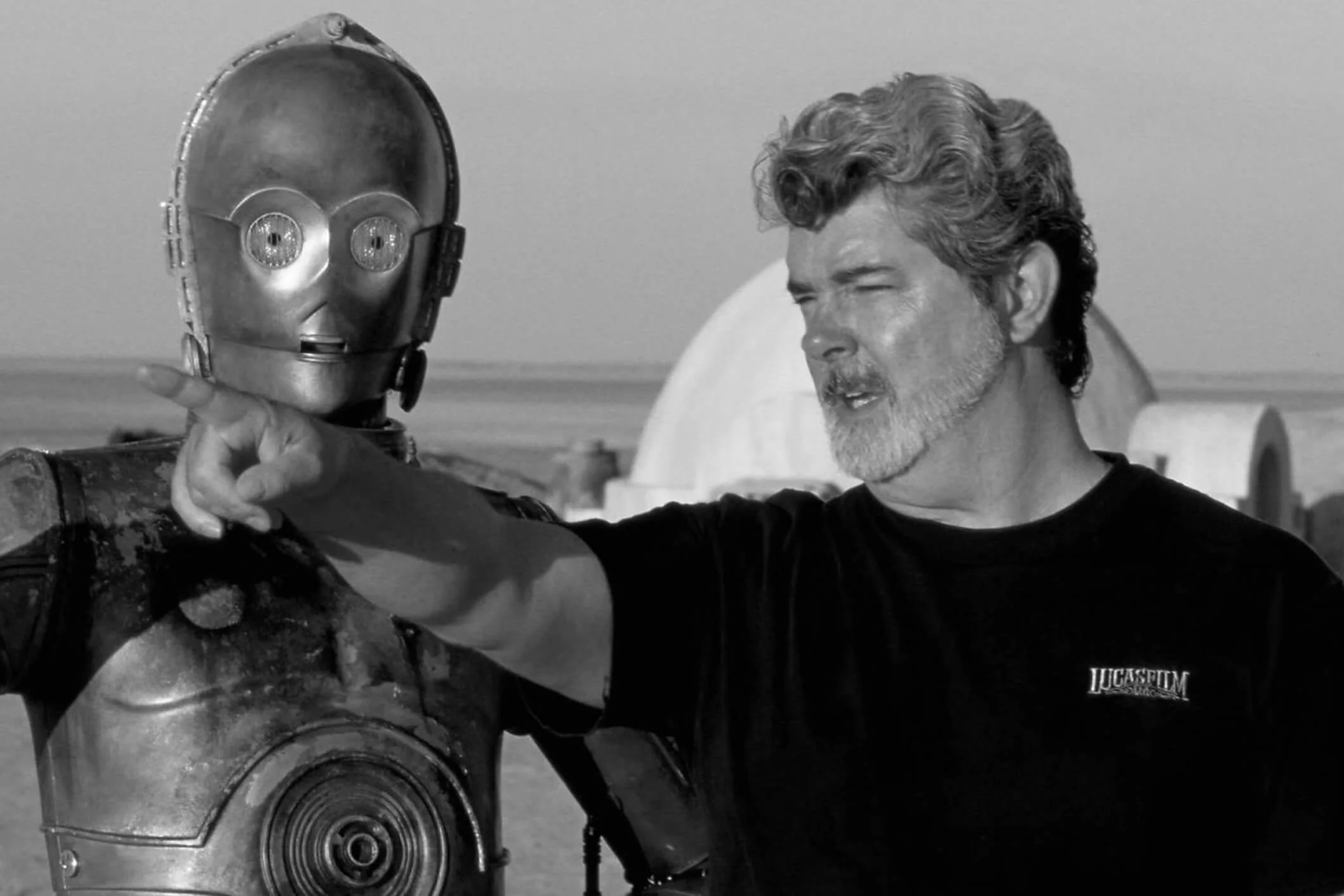
George Lucas, Founder and Former CEO of Lucasfilm

In October 2012, The Walt Disney Company acquired Lucasfilm, the production company behind the Star Wars and Indiana Jones sagas, from founder George Lucas for $4 billion. It remains one of the most high-profile M&A deals in entertainment history.

Lucas was a pioneering filmmaker who had built an independent empire. He intended the exit as a deliberate handover to ensure his creations endured beyond his lifetime.

The transaction delivered extraordinary early financial returns for both parties. However, the honeymoon didn't last long. Worse, it also delivered something Lucas had not foreseen: the pain of watching strangers dismantle the creative vision he had spent a lifetime constructing. Despite the aid of sophisticated lawyers, top-tier M&A advisors, and seasoned business leaders, Lucas saw his legacy wiped out.

His public expressions of seller’s remorse offer a cautionary tale for all conscious business leaders contemplating an exit.
Listen to a discussion inspired by this article on the Glenshore Perspectives podcast.

Subscribe on Apple | Spotify

A Financial Empire, a Rebel Spirit, and a Global Cultural Force

Born in the 1940s in California, USA, George Lucas initially studied anthropology, sociology, and literature before a near-fatal car accident ended his racing ambitions and redirected his focus toward filmmaking. In 1969, he co-founded the film production company American Zoetrope with Francis Ford Coppola in San Francisco, aiming to foster independent filmmaking outside the constraints of Hollywood. His first movie THX 1138 was distributed by Warner Bros, but the studio heavily edited the film against Lucas's wishes. Disillusioned by this loss of creative control, he founded Lucasfilm in 1971 to ensure independence and prevent any studio from dictating the final cut of his work again.

In 1973, his breakthrough movie American Graffiti was produced for just $777,000 and grossed roughly $140 million worldwide. In 1977, Lucas directed Star Wars: A New Hope. Produced for $11 million, it generated $775 million worldwide during its original run and re-releases ($3.5 billion in 2026, adjusted for inflation).

Lucas made decisions that changed the entertainment industry. For Star Wars, he negotiated with distributor 20th Century Fox a reduced director’s fee in exchange for merchandising and sequel rights, initiating the modern franchise model. Toy company Kenner sold more than 300 million Star Wars action figures from 1978 to 1985 alone. Lucas also established multiple subsidiaries: Industrial Light & Magic for visual effects (creating effects for E.T., Jurassic Park, and Terminator 2), Skywalker Sound for audio standards (creator of the THX System), and the Lucasfilm Computer Division (sold to Steve Jobs in 1986, becoming Pixar). By 2012, Lucasfilm employed about 2,000 people, and the Star Wars brand had generated an estimated $27 billion in revenue, with merchandise accounting for the majority.

Beyond finances, Star Wars also had a major impact on global culture. It revived the space opera genre, elevating it from pulp science fiction to epic galaxy-spanning storytelling. Its narrative core lies in Joseph Campbell's universal template of departure, initiation, and return from the book The Hero with a Thousand Faces (the journey from farm boy to Jedi hero). The saga draws from the chivalric code of King Arthur (Jedi as knight-monks) and the samurai code of Bushido (the ethos of loyalty, discipline, and moral integrity). It incorporates elements of Taoism (the flow of universal energy), Buddhism (fear leads to anger, anger to hate, and hate to suffering), Christianity (redemption and sacrifice), and even Zoroastrianism (dualism of light and dark) and Gnosticism (the emphasis on spirit over physical form). It also drew inspiration from Japanese director Akira Kurosawa’s samurai films, especially The Hidden Fortress (with its villain, fleeing princess, peasant perspectives, and comic duo dynamics).

This synthesis gave Star Wars a depth and trans-generational resonance that pure spectacle could never achieve. By 2012, it had become an enduring global phenomenon: the original film was among the first inducted into the Library of Congress National Film Registry for being culturally significant, the Jedi religion was listed by more than 500,000 people across the English-speaking world in government censuses, the saga was the subject of academic curriculum at institutions including USC, Northwestern, and Georgetown, and the phrase "May the Force be with you" had become embedded in everyday lexicon.

Exit Rationale, Deal Structure, and Integration

At 68, planning to remarry and expecting a baby, Lucas sought retirement to focus on family, philanthropy, and experimental films. He publicly declared it was time to pass Star Wars on to a new generation of filmmakers. With no heirs involved in the business, he turned to M&A as a path to succession.

He selected Disney, a global media conglomerate with over $42 billion in annual revenue, under the leadership of CEO Robert Iger. Disney had previously acquired Pixar ($7.4 billion, 2006) and Marvel ($4 billion, 2009). Lucas, conscious of his legacy, viewed Disney’s family-friendly ethos as aligned with the Star Wars themes of heroism and moral clarity. Iger personally courted Lucas over 18 months to build trust.

The transaction valued Lucasfilm at $4 billion (an implied 10x normalized historical EBITDA). Lucas received approximately half in cash and half in Disney shares. As part of the deal, Lucas handpicked his successor (Kathleen Kennedy), was named a Creative Consultant, and provided detailed story treatments for the next trilogy he had been developing. Post-closing, Disney integrated Lucasfilm into its studios division, granting it operational autonomy similar to Pixar.

Financial Wins but Cultural Turmoil

Financially, the acquisition was initially a success. The sequel trilogy and spinoffs grossed approximately $6 billion worldwide. Streaming successes like The Mandalorian drove Disney+ to 10 million signups within just 24 hours of launch, while theme park expansions like Galaxy’s Edge contributed to a 6% revenue increase for the Parks division in its opening quarter. Lucas personally benefited enormously as his Disney shares appreciated, reaching $7 billion in 2021.

However, beneath these aggregate numbers, the trajectory told a different story.

Creatively, the sequel trilogy was criticized for lacking the unified vision Lucas had provided for the previous six films. Box office returns declined with each installment: $2.07 billion for The Force Awakens (2015), $1.33 billion for The Last Jedi (2017), and $1.07 billion for The Rise of Skywalker (2019). Solo: A Star Wars Story (2018) became the first Star Wars film to lose money (estimated $77 million loss). Furthermore, the Galactic Starcruiser immersive hotel opened in 2022 only to close 19 months later.

According to Bob Iger (The Ride of a Lifetime, 2019), friction between Disney and Lucas arose rapidly regarding the creative decisions made. Lucas felt betrayed. He described the sale in a 2015 interview with Charlie Rose as "selling his kids to the white slavers", which revealed the depth of his anguish. In a 2020 conversation with Paul Duncan, he described the process as "very, very painful," like a breakup or "handing your kids over to the wrong people". Lucas realized that while he understood the legal reality of the contract, he had believed the purchase came with a tacit promise of stewardship that was ultimately broken.

Reflections for Business Leaders

What made Lucasfilm successful was its operation under Lucas’s singular creative approach, which enabled the production of its distinctive IP. As a privately held company with Lucas as the sole shareholder, it was insulated from short-term public-market pressures. Every decision flowed through one vision.

However, the moment a unique organization enters the hands of a public company structured for scale and shareholder returns, everything changes. The M&A deal with Disney exposed this classic tension in founder exits.

Clayton Christensen’s Harvard Business Review framework distinguishes "Leverage My Business Model" acquisitions (integrating resources into existing operations for efficiency) from "Reinvent My Business Model" acquisitions (preserving a unique culture or creative engine). Lucasfilm was the latter: its value resided in Lucas’s vision.

Disney was not a predatory acquirer. It was a sophisticated, well-resourced entertainment conglomerate that genuinely admired the franchise. Disney acquired Lucasfilm as a Reinvent asset. However, a structural problem emerged: a publicly traded company operating under the doctrine of economist Milton Friedman’s shareholder value maximization will, inevitably, optimize for financial throughput. Consequently, under shareholder-value pressures, Disney treated it as a Leverage asset, accelerating production and replacing coherence with committee-driven output. One creator's coherent mythological vision was replaced by a production model optimized for quarterly content output. For a founder whose legacy matters, that structural reality is the risk, regardless of how much goodwill exists at the signing table. The nature of the buyer matters.

George Lucas received a massive fortune but watched the meaning of his life's work recede. His experience is the archetype of seller's remorse, which affects an estimated 75% of founders within a year of their exit. The regret was not about the money, but about the realization that the standard M&A playbook treated the company he founded as a financial asset to be optimized rather than a mission to be upheld.

For business leaders who have built something meaningful, Lucas’s story poses the essential question: Was the M&A transaction process designed as an exit or a succession? An exit maximizes the check. A succession preserves your life’s work. Years later, you can observe that what you built still reflects the values that made it matter in the first place, and continues to thrive in the right hands. By that measure, one of the most iconic entertainment M&A deals also became one of its most instructive failures in stewardship.

Amine Laouedj Managing Director, Glenshore

I advise responsible business leaders who wish to ensure their company ends up in the right hands and continues to flourish after their exit. If these perspectives resonate with your thoughts, I welcome a conversation. Please connect or message me on LinkedIn.

Glenshore is a boutique investment bank with the Succession M&A Playbook, a disciplined approach to align financial outcomes with long-term mission and legacy preservation. Learn more at glenshore.com.

Yvon Chouinard’s Patagonia Succession: A Legacy-First Approach to Mergers and Acquisitions

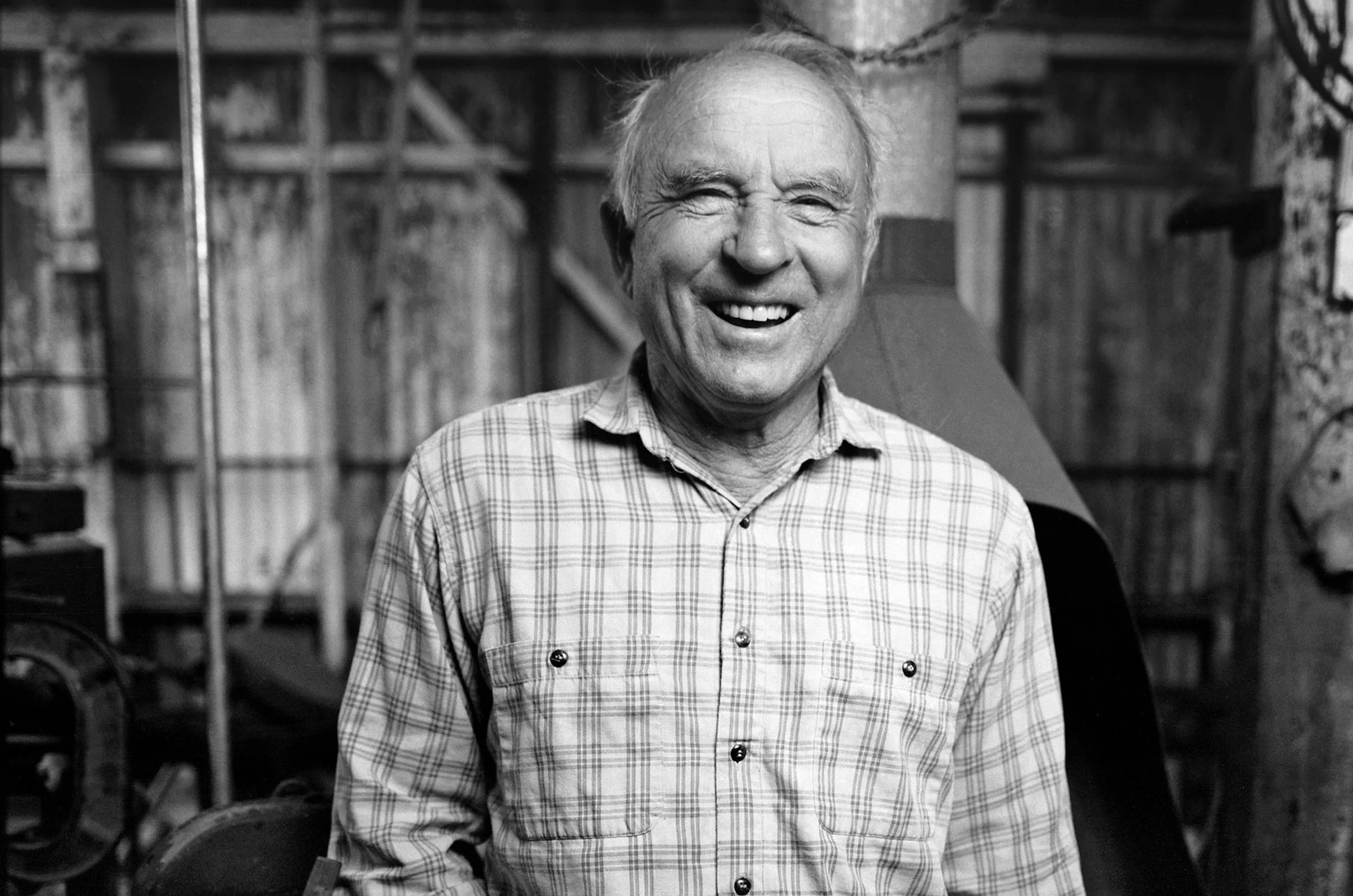
Yvon Chouinard, Founder and Former CEO of Patagonia

In the annals of recent business history, few decisions capture the essence of principled leadership as vividly as Yvon Chouinard’s exit from Patagonia in 2022.

In his early 80s, Chouinard faced a universal dilemma for founders: what to do with the company he had built over five decades around high-quality products and environmental activism. Patagonia, the Ventura, California-based outdoor apparel giant valued at around $3 billion, was more than just a business. It had long prioritized environmental stewardship over obsessed growth.

Rather than pursuing maximum financial proceeds through a competitive Mergers & Acquisitions auction or IPO, Chouinard structured the succession to protect Patagonia’s core mission of environmental responsibility while ensuring ongoing profitability. This decision stands as one of the clearest real-world examples of how a founder can design succession to sustain a company while sidestepping the value-destruction dynamics common in the standard M&A playbook.
Listen to a discussion inspired by this article on the Glenshore Perspectives podcast.

Subscribe on Apple | Spotify

The Founder’s Succession Dilemma in Purpose-Driven Businesses

In the 1950s, Yvon Chouinard, a rock-climbing enthusiast, started as a blacksmith forging climbing gear in his garage in Ventura, California. He founded Patagonia in 1973 with a simple ethos: create high-quality products that cause the least harm to the planet. Chouinard named the company after the rugged Patagonian region in South America that inspired his early adventures, though the business has always been headquartered in the United States.

Over the years, the company became synonymous with environmental activism, suing the U.S. government over public lands, donating 1% of sales to grassroots nonprofits since 1985, and pioneering sustainable materials like organic cotton and recycled polyester. By the early 2020s, Patagonia was generating over $1 billion in annual revenue, with profits around $100 million yearly.

As Chouinard considered succession, family ownership was not viable: his adult children had no interest in running or inheriting the company. Selling to a strategic buyer, a private equity firm, or taking it public carried clear risks. In his words from the 2022 announcement: “One option was to sell Patagonia and donate all the money. But we couldn’t be sure a new owner would maintain our values or keep our team of people around the world employed.” An IPO, he noted, would subject the company to shareholders “who might push us to create short-term gain at the expense of long-term vitality and responsibility.”

These concerns align directly with documented M&A patterns. Research from PwC, KPMG, and Harvard Business Review shows 70–90% of transactions fail to create expected value, often because aggressive post-closing integration, driven by the need to recoup high purchase prices, erodes the cultural and relational elements within the organisation that sustain performance. Chouinard’s choice avoided placing Patagonia in that standard M&A playbook trap.

Avoiding the Traps of Price-Centric Mergers & Acquisitions

In a conventional process, M&A advisors would prepare an attractive equity story emphasizing strategic rationale and financial metrics to attract the broadest pool of buyers, then run a time-compressed auction process where price dominates bid evaluation. This creates a tunnel effect: intangibles like culture, employee loyalty, and mission alignment become secondary or invisible, as price becomes the dominant criterion. The winning bidder, having paid a premium (often 10–35%), faces immediate pressure to deliver synergies through cost reductions or restructuring, frequently cutting the “muscle” (unique capabilities and relational networks) along with any perceived “fat.” That leads to shareholder value destruction. This is the winner’s curse.

Chouinard rejected this path.

He and his family transferred voting stock (2% of total shares) to the Patagonia Purpose Trust, governed by family members and trusted advisors to safeguard the company’s values and B Corporation status. The remaining 98% of non-voting stock went to the Holdfast Collective, a nonprofit dedicated to fighting the environmental crisis through policy advocacy, conservation, and community support. Annual profits not reinvested in the business flow as dividends to the Collective, approximately $100 million per year based on recent performance, rather than to private shareholders. The family paid roughly $17.5 million in gift taxes on the voting shares, and no tax-avoidance motive was claimed.

Today, Patagonia continues to operate as an independent for-profit company, free from external pressure to maximize short-term returns.

By forgoing an auction entirely, he prevented the winner’s curse dynamic and the subsequent “poisoned check” that many sellers experience: immediate life-changing liquidity paired with long-term regret over the company’s erosion due the wrong buyer. His structure makes the company’s DNA the central element of continuity rather than erasing it for marketability.

Through the Lens of Responsible Capitalism

Chouinard’s exit embodies a principled alternative to current business practices, drawing from Adam Smith’s “impartial spectator” from The Theory of Moral Sentiments (1759), the moral conscience guiding action, rather than the profit-maximization doctrine that has dominated corporate thinking since Milton Friedman’s article “The Social Responsibility of Business Is to Increase Its Profits” (1970) in the New York Times. Chouinard realigned profit as a means to sustain human and societal ends, rather than an end in itself. It addresses the three anthropological imperatives that we all have as human beings: agency (ongoing capacity to act on the environment), reciprocity (mutual obligations to employees, customers, and ecosystems), and lineage (perpetual transmission of value to future generations).

Chouinard’s responsible business leadership and Patagonia’s culture of activism and innovation became the cornerstone of the succession. The company remains profitable, reinvesting in growth while directing surpluses to higher ends. Chouinard’s story proves that stewardship can coexist with financial health, consistent with studies showing higher success rates when these factors are addressed upfront in M&A transaction processes. It also challenges business leaders to question the concept of success in M&A dealmaking, and in business in general.

Reflections for Business Leaders

Yvon Chouinard’s story is timeless because it addresses eternal leadership dilemmas: How do you preserve what you’ve built? When do you let go, and to whom? In an era of elevated M&A activity (e.g., $3.4 trillion in 2024 per McKinsey, with continued momentum in 2025), his example urges executives to design successions that champion responsibility and honour the human adventure of business.

These are not calls to idealism but recognition of trade-offs that the standard M&A playbook often obscure. In an environment where 70% of transactions still destroy value after closing, Patagonia offers a documented alternative: succession designed for the long term.

Chouinard’s decision does not pretend to be easy or universally replicable. But it shows that a founder can exit without liquidating the meaning of what was built and their legacy, one structural choice at a time.

Corporations are vessels for human purpose. As Chouinard put it, “We’re in business to save our home planet.” His succession ensures Patagonia’s adventure continues, not as a hollowed-out asset, but as a living force for good. For leaders facing their own transitions, this is more than inspiration, it's a call to restore the compass to true north, decision by decision. In a world of hollow successes, Chouinard’s choice stands as a beacon of what principled capitalism can achieve.

Amine Laouedj Managing Director, Glenshore

I advise responsible business leaders who wish to ensure their company ends up in the right hands and continues to flourish after their exit. If these perspectives resonate with your thoughts, I welcome a conversation. Please connect or message me on LinkedIn.

Glenshore is a boutique investment bank with the Succession M&A Playbook, a disciplined approach to align financial outcomes with long-term mission and legacy preservation. Learn more at glenshore.com.