
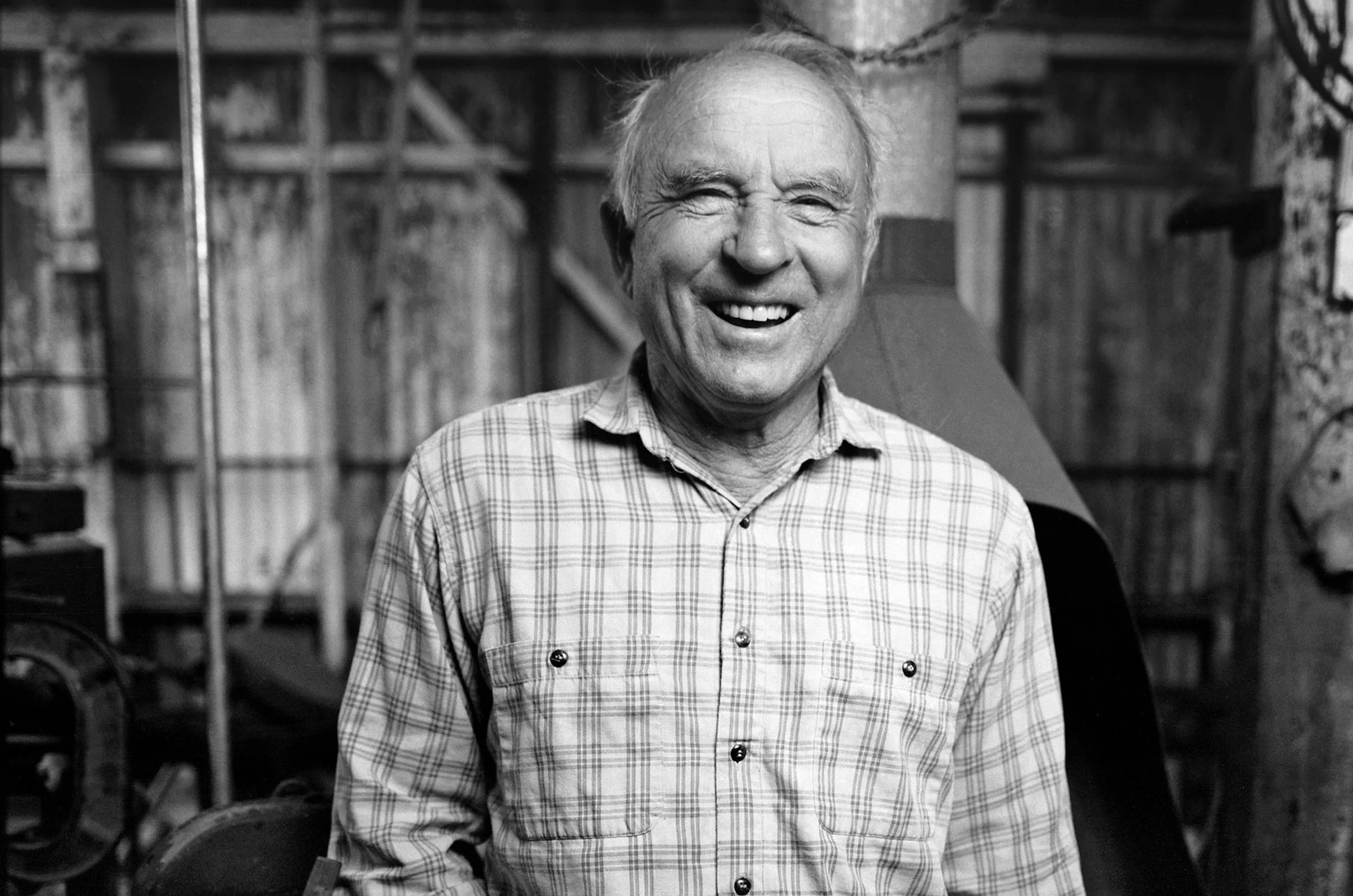
Yvon Chouinard, Founder and Former CEO of Patagonia
In his early 80s, Chouinard faced a universal dilemma for founders: what to do with the company he had built over five decades around high-quality products and environmental activism. Patagonia, the Ventura, California-based outdoor apparel giant valued at around $3 billion, was more than just a business. It had long prioritized environmental stewardship over obsessed growth.
Rather than pursuing maximum financial proceeds through a competitive Mergers & Acquisitions auction or IPO, Chouinard structured the succession to protect Patagonia’s core mission of environmental responsibility while ensuring ongoing profitability. This decision stands as one of the clearest real-world examples of how a founder can design succession to sustain a company while sidestepping the value-destruction dynamics common in the standard M&A playbook.
The Founder’s Succession Dilemma in Purpose-Driven Businesses
In the 1950s, Yvon Chouinard, a rock-climbing enthusiast, started as a blacksmith forging climbing gear in his garage in Ventura, California. He founded Patagonia in 1973 with a simple ethos: create high-quality products that cause the least harm to the planet. Chouinard named the company after the rugged Patagonian region in South America that inspired his early adventures, though the business has always been headquartered in the United States.
Over the years, the company became synonymous with environmental activism, suing the U.S. government over public lands, donating 1% of sales to grassroots nonprofits since 1985, and pioneering sustainable materials like organic cotton and recycled polyester. By the early 2020s, Patagonia was generating over $1 billion in annual revenue, with profits around $100 million yearly.
As Chouinard considered succession, family ownership was not viable: his adult children had no interest in running or inheriting the company. Selling to a strategic buyer, a private equity firm, or taking it public carried clear risks. In his words from the 2022 announcement: “One option was to sell Patagonia and donate all the money. But we couldn’t be sure a new owner would maintain our values or keep our team of people around the world employed.” An IPO, he noted, would subject the company to shareholders “who might push us to create short-term gain at the expense of long-term vitality and responsibility.”
These concerns align directly with documented M&A patterns. Research from PwC, KPMG, and Harvard Business Review shows 70–90% of transactions fail to create expected value, often because aggressive post-closing integration, driven by the need to recoup high purchase prices, erodes the cultural and relational elements within the organisation that sustain performance. Chouinard’s choice avoided placing Patagonia in that standard M&A playbook trap.
Avoiding the Traps of Price-Centric Mergers & Acquisitions
In a conventional process, M&A advisors would prepare an attractive equity story emphasizing strategic rationale and financial metrics to attract the broadest pool of buyers, then run a time-compressed auction process where price dominates bid evaluation. This creates a tunnel effect: intangibles like culture, employee loyalty, and mission alignment become secondary or invisible, as price becomes the dominant criterion. The winning bidder, having paid a premium (often 10–35%), faces immediate pressure to deliver synergies through cost reductions or restructuring, frequently cutting the “muscle” (unique capabilities and relational networks) along with any perceived “fat.” That leads to shareholder value destruction. This is the winner’s curse.
Chouinard rejected this path.
He and his family transferred voting stock (2% of total shares) to the Patagonia Purpose Trust, governed by family members and trusted advisors to safeguard the company’s values and B Corporation status. The remaining 98% of non-voting stock went to the Holdfast Collective, a nonprofit dedicated to fighting the environmental crisis through policy advocacy, conservation, and community support. Annual profits not reinvested in the business flow as dividends to the Collective, approximately $100 million per year based on recent performance, rather than to private shareholders. The family paid roughly $17.5 million in gift taxes on the voting shares, and no tax-avoidance motive was claimed.
Today, Patagonia continues to operate as an independent for-profit company, free from external pressure to maximize short-term returns.
By forgoing an auction entirely, he prevented the winner’s curse dynamic and the subsequent “poisoned check” that many sellers experience: immediate life-changing liquidity paired with long-term regret over the company’s erosion due the wrong buyer. His structure makes the company’s DNA the central element of continuity rather than erasing it for marketability.
Through the Lens of Responsible Capitalism
Chouinard’s exit embodies a principled alternative to current business practices, drawing from Adam Smith’s “impartial spectator” from The Theory of Moral Sentiments (1759), the moral conscience guiding action, rather than the profit-maximization doctrine that has dominated corporate thinking since Milton Friedman’s article “The Social Responsibility of Business Is to Increase Its Profits” (1970) in the New York Times. Chouinard realigned profit as a means to sustain human and societal ends, rather than an end in itself. It addresses the three anthropological imperatives that we all have as human beings: agency (ongoing capacity to act on the environment), reciprocity (mutual obligations to employees, customers, and ecosystems), and lineage (perpetual transmission of value to future generations).
Chouinard’s responsible business leadership and Patagonia’s culture of activism and innovation became the cornerstone of the succession. The company remains profitable, reinvesting in growth while directing surpluses to higher ends. Chouinard’s story proves that stewardship can coexist with financial health, consistent with studies showing higher success rates when these factors are addressed upfront in M&A transaction processes. It also challenges business leaders to question the concept of success in M&A dealmaking, and in business in general.
Reflections for Business Leaders
Yvon Chouinard’s story is timeless because it addresses eternal leadership dilemmas: How do you preserve what you’ve built? When do you let go, and to whom? In an era of elevated M&A activity (e.g., $3.4 trillion in 2024 per McKinsey, with continued momentum in 2025), his example urges executives to design successions that champion responsibility and honour the human adventure of business.
These are not calls to idealism but recognition of trade-offs that the standard M&A playbook often obscure. In an environment where 70% of transactions still destroy value after closing, Patagonia offers a documented alternative: succession designed for the long term.
Chouinard’s decision does not pretend to be easy or universally replicable. But it shows that a founder can exit without liquidating the meaning of what was built and their legacy, one structural choice at a time.
Corporations are vessels for human purpose. As Chouinard put it, “We’re in business to save our home planet.” His succession ensures Patagonia’s adventure continues, not as a hollowed-out asset, but as a living force for good. For leaders facing their own transitions, this is more than inspiration, it's a call to restore the compass to true north, decision by decision. In a world of hollow successes, Chouinard’s choice stands as a beacon of what principled capitalism can achieve.
—
Amine Laouedj Managing Director, Glenshore
I advise responsible business leaders who wish to ensure their company ends up in the right hands and continues to flourish after their exit. If these perspectives resonate with your thoughts, I welcome a conversation. Please connect or message me on LinkedIn.
Glenshore is a boutique investment bank with the Succession M&A Playbook, a disciplined approach to align financial outcomes with long-term mission and legacy preservation. Learn more at glenshore.com.
Disclaimer: The analysis contained herein reflects publicly available information as of the date of publication, sourced from official filings, academic literature, and verified secondary sources without the use of proprietary or non-public data. The views expressed are those of Glenshore and are provided solely for informational and educational purposes; they do not constitute investment or financial advice, nor a recommendation to take any particular action. This material may contain forward-looking statements, and past performance is not indicative of future results. Glenshore makes no representations or warranties regarding the accuracy or completeness of this information and disclaims any liability for reliance upon it for any purpose. Any third-party organization mentioned is the property of its respective company and is used strictly for identification purposes. This material may not be copied, distributed, published, or reproduced in whole or in part without the express written consent of Glenshore.