
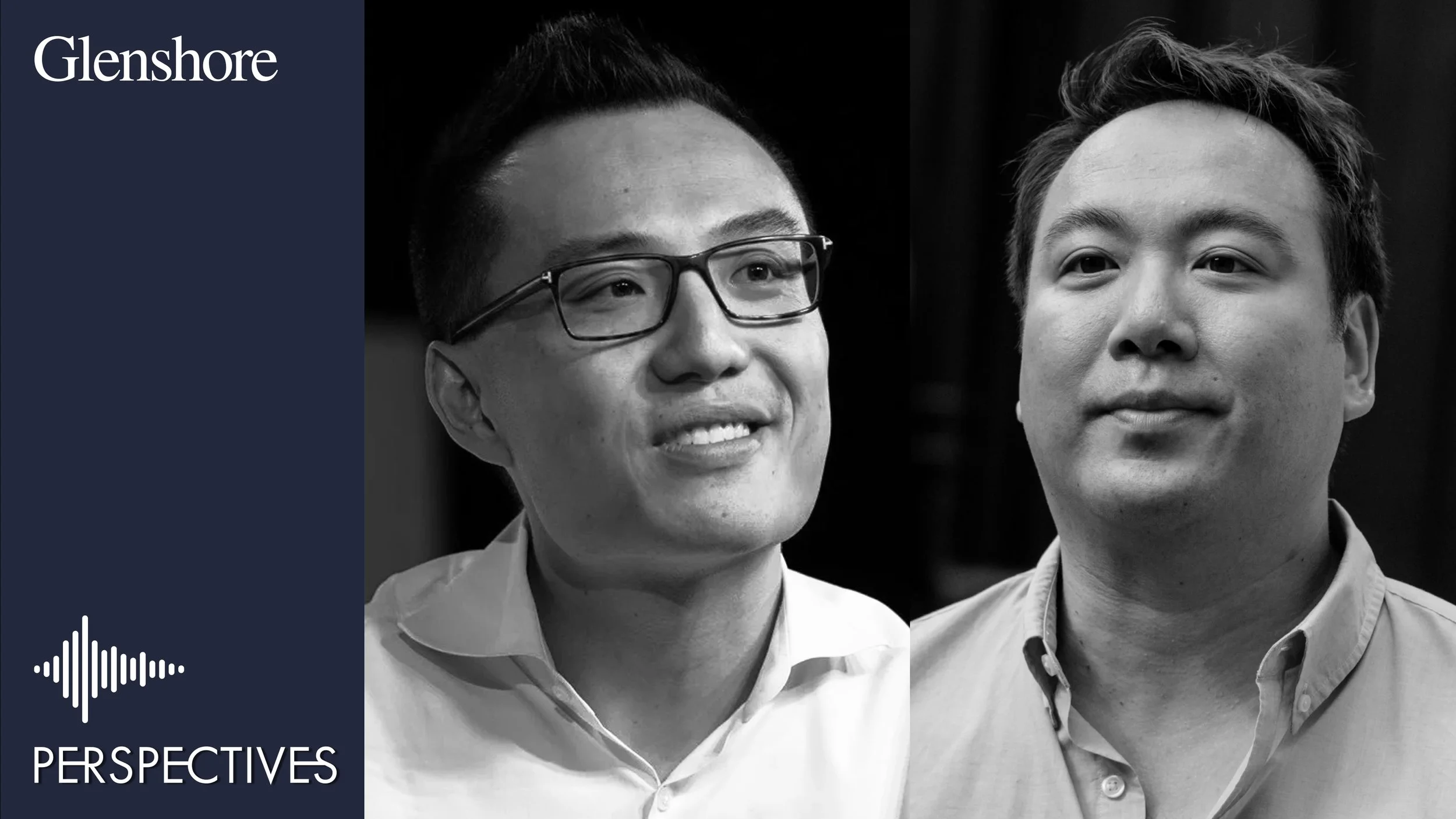
DoorDash CEO Tony Xu and Deliveroo Founder Will Shu
DoorDash dominated the US with a commanding 67% market share but has run out of room to grow at home. Following the purchase of Finland's Wolt in 2022, this deal marked its second major international acquisition and another massive bet that the playbook it used to build its domestic dominance can be replicated across a new batch of markets. DoorDash must now execute this strategy across nine distinct regulatory regimes, against entrenched local competitors, and without the founder who built Deliveroo over the last 12 years.
Can this deal, which makes perfect sense by the standard M&A playbook, survive contact with operational reality?
Context
The global online food delivery industry generated an estimated $289 billion in revenue in 2024, with the Asia-Pacific region accounting for $130 billion, the Americas at $100 billion, and Europe contributing $45 billion.
The competitive structure varies sharply by market. In the US, DoorDash captures 67% of consumer spending on food delivery, vastly outpacing Uber Eats at 23% and Grubhub at 6%. In the UK, three platforms compete at significant scale with no clear winner. Uber Eats leads with 27.2% of delivery occasions, followed tightly by Just Eat at 25.2% and Deliveroo at 16.2%. In France, Uber Eats is the dominant platform with Deliveroo a distant second. In Italy, four platforms share the market, with Just Eat and Glovo edging out Deliveroo. In Belgium and Ireland, Deliveroo and Uber Eats split the market without either holding a commanding position. Conversely, in the Nordics, Central and Eastern Europe, and Japan, DoorDash operates through Wolt and holds leading positions. In Singapore and three Gulf states (UAE, Kuwait, and Qatar), Deliveroo competes behind locally dominant platforms like Grab in Singapore and Talabat in the Gulf. Crucially, before the deal, the two companies' footprints did not overlap anywhere.
Within this landscape, DoorDash and Deliveroo occupy vastly different realities.
DoorDash (NASDAQ: DASH) was founded in San Francisco in 2013. While Grubhub and Uber Eats fought over prime urban territory in New York, Chicago, and Los Angeles, DoorDash expanded into suburban and rural areas where it was often the only option. That geographic strategy, combined with a proprietary logistics algorithm ("Deep Red") and a $9.99/month subscription program (DashPass, boasting over 22 million members including Wolt+), produced a self-reinforcing cycle. More coverage attracted more consumers. Consumers attracted restaurants. Restaurants generated orders, and order density made the rider network hyper-efficient. By 2024, DoorDash reported $80.2 billion in gross order value (GOV), $10.7 billion in revenue, $1.9 billion in adjusted EBITDA, and its first full year of positive net income at $123 million. But, even after acquiring Wolt in 2022, 85% of its app downloads still originated in the US.
Deliveroo (formerly LSE: ROO) was founded in London in 2013. The company expanded into nine countries, partnering with 186,000 restaurants and 135,000 riders to serve an average of 7.1 million monthly active consumers in 2024. Deliveroo built a premium brand in the UK, pioneering the "Editions" dark kitchen model, delivery-only kitchens that allow restaurants to expand into new neighborhoods without opening new locations. It also cultivated a growing advertising business operating at an annualized run rate of £113 million in Q4 2024 (1.4% of GTV). In 2024, Deliveroo reported £2.1 billion in revenue, £7.4 billion in GTV, and £130 million in adjusted EBITDA. After 12 years of operation, it finally achieved its first statutory profit (£2.9 million) and positive free cash flow (£86 million). Yet, as the market map shows, Deliveroo held a dominant position in none of its nine markets, having already retreated from Australia in 2022 and Hong Kong in April 2025 due to unsustainable economics.
This competitive landscape is entirely dictated by the harsh economics of the business model.
The online food delivery business connects consumers to restaurants through networks of independent riders. The revenue is split three ways between the platform, restaurant, and rider. Platforms take a 15% to 35% commission from restaurants and charge consumers a delivery fee. Margin survival depends entirely on rider utilization rates, meaning how many orders a rider can complete per hour in a specific area. A rider completing three deliveries per hour in a dense zone costs the platform roughly the same as a rider completing one delivery per hour in a sparse zone. The revenue per delivery is similar. The cost per delivery is not. That gap, between a dense zone and a sparse one, is where margin lives or dies in this business.
This creates a competitive trap. Every platform is incentivized to burn cash on promotions to gain local market share because increased order density lowers the cost per delivery. But when every platform spends simultaneously, no one gains a lasting advantage, and everyone bleeds capital. Game theorists call this a prisoner's dilemma. The only escape is to outspend competitors long enough that they either withdraw or underinvest, leaving one platform with the density required to make the math work.
During the pandemic boom, inflated order volumes allowed multiple platforms to coexist. As consumer behavior normalized and interest rates spiked by more than 500 basis points through 2022 and 2023 limiting Venture Capital investments, the underlying economics reasserted themselves. Platforms without dominant local positions could no longer sustain operations, forcing industry consolidation.
The companies that reached sustained profitability, like DoorDash in the US and Meituan in China, did so by achieving overwhelming local density. Hence, a platform's economics are not determined globally. They are decided city by city, zone by zone.
The Deal
The strategic promise of the deal was to fuse DoorDash's technology, deep capital reserves, and logistics infrastructure with Deliveroo's localized restaurant relationships and rider networks across nine untapped countries. The combined entity would operate in nearly 40 countries, serve 50 million monthly active users, and process $90 billion in annual GOV. Notably, DoorDash declined to publicly commit to a timeline for profitability in Deliveroo's markets.
The transaction was an all-cash acquisition at 180 pence per Deliveroo share, a 40% premium to the three-month volume-weighted average price. The offer valued Deliveroo's equity at £2.9 billion and enterprise value at £2.4 billion (factoring in £668 million in net cash), representing implied LFY and FW EV/EBITDA of 18.5x and 13.3x respectively. For context, Deliveroo went public in March 2021 at 390 pence per share (£7.6 billion valuation). Four years later, DoorDash scooped it up for less than half that price. Following the October 2025 completion, Deliveroo delisted from the LSE. Will Shu stepped down, and DoorDash appointed Miki Kuusi, Head of DoorDash International and founder of Wolt, as his successor.
DoorDash CEO Tony Xu led the buy-side. Xu, who immigrated to the US from China at age five, studied at Stanford GSB, worked at McKinsey, and currently controls 69% of DoorDash's voting rights. On the sell-side stood Deliveroo co-founder Will Shu, who built the company from a one-man operation in Chelsea. Armed with degrees from Northwestern and Wharton and a background in finance, Shu uniquely understood the granular realities of the UK market. He delivered food himself for the first eight months and continued doing so periodically throughout his tenure, maintaining a ground-level understanding of the delivery experience that few platform CEOs possess. He navigated Deliveroo through a disastrous IPO, fierce rider classification court battles, and market exits. Miki Kuusi, co-founder of Wolt, stepped in to run operations outside the US and serve as CEO of Deliveroo. While Kuusi successfully scaled Wolt in Helsinki and seamlessly integrated it into DoorDash, he has never operated in the fiercely competitive and heavily regulated corridors of the UK, France, or the Middle East.
The Debate
The Case For
Beyond the publicized technical synergies, the crux of the deal relies on DoorDash's ability to take Deliveroo's subscale operations and force them into sustainable, dense local networks.
DoorDash has done this before. It surged from 18% to 67% US market share over six years through relentless investment in geographic coverage and consumer acquisition. Furthermore, they proved the thesis internationally with Wolt. By layering capital and technology over Wolt while maintaining its localized brand, international revenue grew faster than the US business. By Q3 2025, management reported record international unit economics.
DoorDash brings heavy artillery to target rider utilization. It uses the "Deep Red" routing algorithm, the sticky DashPass subscription model, and a high-margin advertising platform capable of subsidizing market share wars. DoorDash also possesses the balance sheet and investor patience required to endure a multi-year cash burn in Deliveroo's markets if the eventual unit economics justify the cost.
The Case Against
The central question is whether DoorDash's playbook can survive contact with vastly different market conditions, rather than simply relying on capital to brute-force a win.
The three pillars of DoorDash's US dominance are a massive market capable of absorbing sustained losses, fragmentation allowing a clear winner, and gig-friendly labor laws. These are completely absent in Deliveroo's footprint. In the UK, DoorDash faces two entrenched competitors holding over 25% market share. In France, platform work legislation is notoriously strict.
The Wolt precedent also carries caveats. Wolt operated primarily in the Nordics and Eastern Europe, where competitive intensity was lower, and it was often the market leader. Deliveroo is the third-largest platform in its home market. Wolt proved DoorDash could optimize an already dominant platform. It did not prove DoorDash could catapult a third-place platform into first.
Regulatory risk also directly attacks the deal's core mechanism. The UK Employment Rights Bill and the EU's Platform Workers Directive threaten to fundamentally alter rider classification. If courts mandate social security and pension contributions, as Italy already has for Deliveroo, the cost per delivery spikes. DoorDash's technology is designed to optimize rider utilization. European legislation is designed to increase rider cost. These forces are fundamentally opposed.
Furthermore, the competitive environment is hostile. Prosus finalized its €4.1 billion acquisition of Just Eat Takeaway.com also in October 2025. DoorDash isn't fighting a weakening Grubhub. It must now outspend a newly fortified Just Eat and an unyielding Uber Eats simultaneously.
Further Reflections for Business Leaders
For us at Glenshore, this transaction highlights two dimensions that the standard M&A playbook often underweights. These dimensions will ultimately determine this deal's fate.
The first is consumer behavior in multi-platform markets. DoorDash built its US monopoly in suburban regions where it was often the default, solitary option. Consumer behavior was characterized by consolidation. In contrast, European consumers routinely "multi-home," toggling between three or four delivery apps based on instantaneous promotional pricing. In a multi-homing environment, promotional spend generates temporary volume, not durable loyalty. The consumer returns to whichever app offers the best deal on the next order, and no amount of investment changes that reflex easily. DashPass and Deep Red might improve existing order margins, but they cannot inherently solve consumer fickleness. The open question is whether true local density is even achievable in a market resistant to app consolidation.
The second dimension is the loss of institutional capability disguised as a standard leadership transition. The replacement of Will Shu with Miki Kuusi is viewed through a lens of competence because Kuusi is a proven operator. However, "founder imprinting" dictates that a founder's cognitive frameworks and localized regulatory instincts become the DNA of the organization. Shu spent 12 years fighting European labor battles and building credibility with UK restaurant groups. Anthropologist Mary Douglas argued that organizations develop shared cognitive frameworks shaped by the environments in which they operate. Deliveroo's framework was shaped by a decade of navigating European labor law. DoorDash's was shaped by a decade of operating under Proposition 22 in California. These are complementary but distinct forces: Shu imprinted his instincts on Deliveroo, and Deliveroo as an institution developed regulatory reflexes forged by its operating environment. When two organizations with such radically divergent regulatory DNA merge, friction does not surface in strategy meetings. It bleeds into thousands of daily operational decisions about rider pay, compliance posture, and the trade-off between growth speed and regulatory safety.
Closing
By conventional metrics, DoorDash's acquisition of Deliveroo is defensively sound. The infrastructure and geographic synergies are clear, the regulatory path was unblocked, and the valuation was highly opportunistic.
But conventional metrics miss the plot. DoorDash is betting it can forge local density across nine hostile markets against entrenched rivals, under hostile regulatory regimes, in multi-homing consumer cultures, and without the founder who anchored the ship.
The early signals are stark. In March 2026, a mere six months post-acquisition, DoorDash announced the wind-down of operations in Qatar and Singapore (Deliveroo markets), alongside Japan and Uzbekistan (Wolt markets). Citing a focus on "investing where it sees the clearest path to sustainable scale," the diplomatic corporate language couldn't mask the reality: Two of the nine markets that anchored the promise of this $3.9 billion deal have already been abandoned.
The ultimate verdict will be rendered block by block, city by city. If DoorDash manages to build dominant local density in the surviving markets, $3.9 billion will be remembered as a masterstroke. If it cannot, Tony Xu will have successfully built the largest food delivery empire in the world. And when that is your legacy, who cares about profitability, right?
Right?
—
Amine Laouedj Managing Director, Glenshore
I advise responsible business leaders who wish to ensure their company ends up in the right hands and continues to flourish after their exit. If these perspectives resonate with your thoughts, I welcome a conversation. Please connect or message me on LinkedIn.
Glenshore is a boutique investment bank with the Succession M&A Playbook, a disciplined approach to align financial outcomes with long-term mission and legacy preservation. Learn more at glenshore.com.
Disclaimer: The analysis contained herein reflects publicly available information as of the date of publication, sourced from official filings, academic literature, and verified secondary sources without the use of proprietary or non-public data. The views expressed are those of Glenshore and are provided solely for informational and educational purposes; they do not constitute investment or financial advice, nor a recommendation to take any particular action. This material may contain forward-looking statements, and past performance is not indicative of future results. Glenshore makes no representations or warranties regarding the accuracy or completeness of this information and disclaims any liability for reliance upon it for any purpose. Any third-party organization mentioned is the property of its respective company and is used strictly for identification purposes. This material may not be copied, distributed, published, or reproduced in whole or in part without the express written consent of Glenshore.