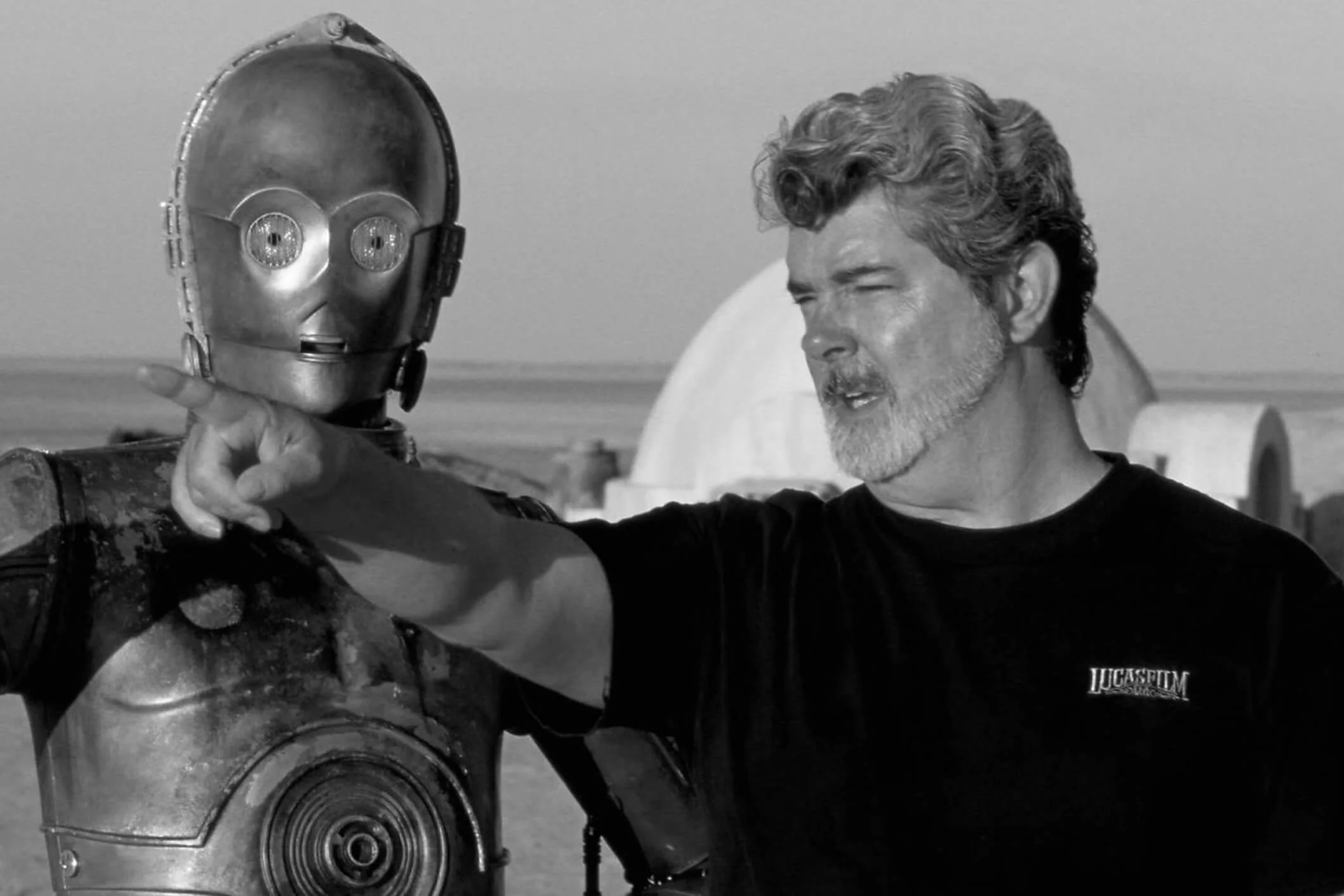
George Lucas and Lucasfilm Succession: A Cautionary Tale of Mergers and Acquisitions

George Lucas, Founder and Former CEO of Lucasfilm

In October 2012, The Walt Disney Company acquired Lucasfilm, the production company behind the Star Wars and Indiana Jones sagas, from founder George Lucas for $4 billion. It remains one of the most high-profile M&A deals in entertainment history.

Lucas was a pioneering filmmaker who had built an independent empire. He intended the exit as a deliberate handover to ensure his creations endured beyond his lifetime.

The transaction delivered extraordinary early financial returns for both parties. However, the honeymoon didn't last long. Worse, it also delivered something Lucas had not foreseen: the pain of watching strangers dismantle the creative vision he had spent a lifetime constructing. Despite the aid of sophisticated lawyers, top-tier M&A advisors, and seasoned business leaders, Lucas saw his legacy wiped out.

His public expressions of seller’s remorse offer a cautionary tale for all conscious business leaders contemplating an exit.
Listen to a discussion inspired by this article:

A Financial Empire, a Rebel Spirit, and a Global Cultural Force

Born in the 1940s in California, USA, George Lucas initially studied anthropology, sociology, and literature before a near-fatal car accident ended his racing ambitions and redirected his focus toward filmmaking. In 1969, he co-founded the film production company American Zoetrope with Francis Ford Coppola in San Francisco, aiming to foster independent filmmaking outside the constraints of Hollywood. His first movie THX 1138 was distributed by Warner Bros, but the studio heavily edited the film against Lucas's wishes. Disillusioned by this loss of creative control, he founded Lucasfilm in 1971 to ensure independence and prevent any studio from dictating the final cut of his work again.

In 1973, his breakthrough movie American Graffiti was produced for just $777,000 and grossed roughly $140 million worldwide. In 1977, Lucas directed Star Wars: A New Hope. Produced for $11 million, it generated $775 million worldwide during its original run and re-releases ($3.5 billion in 2026, adjusted for inflation).

Lucas made decisions that changed the entertainment industry. For Star Wars, he negotiated with distributor 20th Century Fox a reduced director’s fee in exchange for merchandising and sequel rights, initiating the modern franchise model. Toy company Kenner sold more than 300 million Star Wars action figures from 1978 to 1985 alone. Lucas also established multiple subsidiaries: Industrial Light & Magic for visual effects (creating effects for E.T., Jurassic Park, and Terminator 2), Skywalker Sound for audio standards (creator of the THX System), and the Lucasfilm Computer Division (sold to Steve Jobs in 1986, becoming Pixar). By 2012, Lucasfilm employed about 2,000 people, and the Star Wars brand had generated an estimated $27 billion in revenue, with merchandise accounting for the majority.

Beyond finances, Star Wars also had a major impact on global culture. It revived the space opera genre, elevating it from pulp science fiction to epic galaxy-spanning storytelling. Its narrative core lies in Joseph Campbell's universal template of departure, initiation, and return from the book The Hero with a Thousand Faces (the journey from farm boy to Jedi hero). The saga draws from the chivalric code of King Arthur (Jedi as knight-monks) and the samurai code of Bushido (the ethos of loyalty, discipline, and moral integrity). It incorporates elements of Taoism (the flow of universal energy), Buddhism (fear leads to anger, anger to hate, and hate to suffering), Christianity (redemption and sacrifice), and even Zoroastrianism (dualism of light and dark) and Gnosticism (the emphasis on spirit over physical form). It also drew inspiration from Japanese director Akira Kurosawa’s samurai films, especially The Hidden Fortress (with its villain, fleeing princess, peasant perspectives, and comic duo dynamics).

This synthesis gave Star Wars a depth and trans-generational resonance that pure spectacle could never achieve. By 2012, it had become an enduring global phenomenon: the original film was among the first inducted into the Library of Congress National Film Registry for being culturally significant, the Jedi religion was listed by more than 500,000 people across the English-speaking world in government censuses, the saga was the subject of academic curriculum at institutions including USC, Northwestern, and Georgetown, and the phrase "May the Force be with you" had become embedded in everyday lexicon.

Exit Rationale, Deal Structure, and Integration

At 68, planning to remarry and expecting a baby, Lucas sought retirement to focus on family, philanthropy, and experimental films. He publicly declared it was time to pass Star Wars on to a new generation of filmmakers. With no heirs involved in the business, he turned to M&A as a path to succession.

He selected Disney, a global media conglomerate with over $42 billion in annual revenue, under the leadership of CEO Robert Iger. Disney had previously acquired Pixar ($7.4 billion, 2006) and Marvel ($4 billion, 2009). Lucas, conscious of his legacy, viewed Disney’s family-friendly ethos as aligned with the Star Wars themes of heroism and moral clarity. Iger personally courted Lucas over 18 months to build trust.

The transaction valued Lucasfilm at $4 billion (an implied 10x normalized historical EBITDA). Lucas received approximately half in cash and half in Disney shares. As part of the deal, Lucas handpicked his successor (Kathleen Kennedy), was named a Creative Consultant, and provided detailed story treatments for the next trilogy he had been developing. Post-closing, Disney integrated Lucasfilm into its studios division, granting it operational autonomy similar to Pixar.

Financial Wins but Cultural Turmoil

Financially, the acquisition was initially a success. The sequel trilogy and spinoffs grossed approximately $6 billion worldwide. Streaming successes like The Mandalorian drove Disney+ to 10 million signups within just 24 hours of launch, while theme park expansions like Galaxy’s Edge contributed to a 6% revenue increase for the Parks division in its opening quarter. Lucas personally benefited enormously as his Disney shares appreciated, reaching $7 billion in 2021.

However, beneath these aggregate numbers, the trajectory told a different story.

Creatively, the sequel trilogy was criticized for lacking the unified vision Lucas had provided for the previous six films. Box office returns declined with each installment: $2.07 billion for The Force Awakens (2015), $1.33 billion for The Last Jedi (2017), and $1.07 billion for The Rise of Skywalker (2019). Solo: A Star Wars Story (2018) became the first Star Wars film to lose money (estimated $77 million loss). Furthermore, the Galactic Starcruiser immersive hotel opened in 2022 only to close 19 months later.

According to Bob Iger (The Ride of a Lifetime, 2019), friction between Disney and Lucas arose rapidly regarding the creative decisions made. Lucas felt betrayed. He described the sale in a 2015 interview with Charlie Rose as "selling his kids to the white slavers", which revealed the depth of his anguish. In a 2020 conversation with Paul Duncan, he described the process as "very, very painful," like a breakup or "handing your kids over to the wrong people". Lucas realized that while he understood the legal reality of the contract, he had believed the purchase came with a tacit promise of stewardship that was ultimately broken.

Reflections for Business Leaders

What made Lucasfilm successful was its operation under Lucas’s singular creative approach, which enabled the production of its distinctive IP. As a privately held company with Lucas as the sole shareholder, it was insulated from short-term public-market pressures. Every decision flowed through one vision.

However, the moment a unique organization enters the hands of a public company structured for scale and shareholder returns, everything changes. The M&A deal with Disney exposed this classic tension in founder exits.

Clayton Christensen’s Harvard Business Review framework distinguishes "Leverage My Business Model" acquisitions (integrating resources into existing operations for efficiency) from "Reinvent My Business Model" acquisitions (preserving a unique culture or creative engine). Lucasfilm was the latter: its value resided in Lucas’s vision.

Disney was not a predatory acquirer. It was a sophisticated, well-resourced entertainment conglomerate that genuinely admired the franchise. Disney acquired Lucasfilm as a Reinvent asset. However, a structural problem emerged: a publicly traded company operating under the doctrine of economist Milton Friedman’s shareholder value maximization will, inevitably, optimize for financial throughput. Consequently, under shareholder-value pressures, Disney treated it as a Leverage asset, accelerating production and replacing coherence with committee-driven output. One creator's coherent mythological vision was replaced by a production model optimized for quarterly content output. For a founder whose legacy matters, that structural reality is the risk, regardless of how much goodwill exists at the signing table. The nature of the buyer matters.

George Lucas received a massive fortune but watched the meaning of his life's work recede. His experience is the archetype of seller's remorse, which affects an estimated 75% of founders within a year of their exit. The regret was not about the money, but about the realization that the standard M&A playbook treated the company he founded as a financial asset to be optimized rather than a mission to be upheld.

For business leaders who have built something meaningful, Lucas’s story poses the essential question: Was the M&A transaction process designed as an exit or a succession? An exit maximizes the check. A succession preserves your life’s work. Years later, you can observe that what you built still reflects the values that made it matter in the first place, and continues to thrive in the right hands. By that measure, one of the most iconic entertainment M&A deals also became one of its most instructive failures in stewardship.

Amine Laouedj Managing Director, Glenshore

I advise responsible business leaders who wish to ensure their company ends up in the right hands and continues to flourish after their exit. If these perspectives resonate with your thoughts, I welcome a conversation. Please connect or message me on LinkedIn.

Glenshore is a boutique investment bank with the Succession M&A Playbook, a disciplined approach to align financial outcomes with long-term mission and legacy preservation. Learn more at glenshore.com.


Disclaimer: The analysis contained herein reflects publicly available information as of the date of publication, sourced from official filings, academic literature, and verified secondary sources without the use of proprietary or non-public data. The views expressed are those of Glenshore and are provided solely for informational and educational purposes; they do not constitute investment or financial advice, nor a recommendation to take any particular action. This material may contain forward-looking statements, and past performance is not indicative of future results. Glenshore makes no representations or warranties regarding the accuracy or completeness of this information and disclaims any liability for reliance upon it for any purpose. Any third-party organization mentioned is the property of its respective company and is used strictly for identification purposes. This material may not be copied, distributed, published, or reproduced in whole or in part without the express written consent of Glenshore.
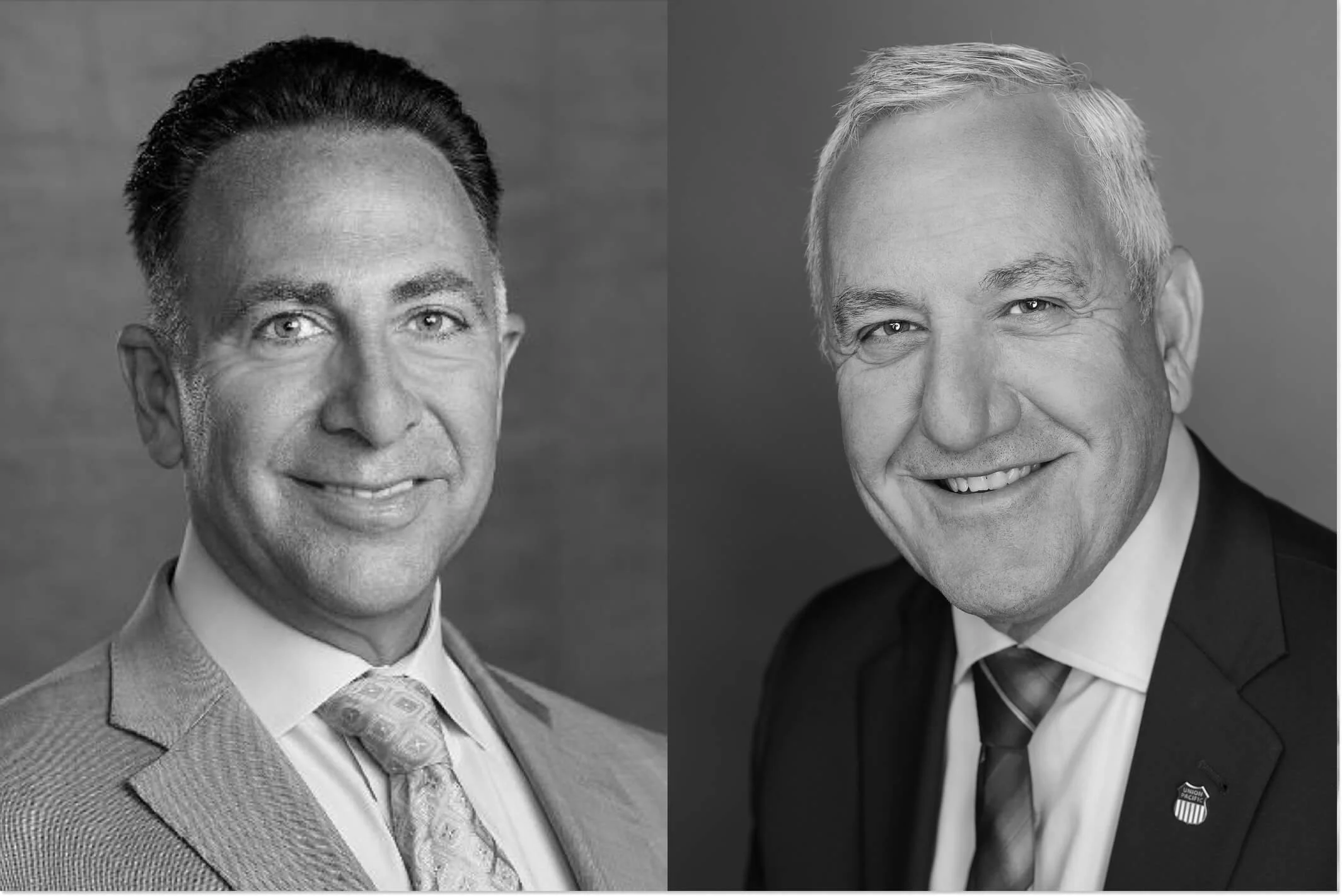

The $85 Billion Bet. Can Union Pacific and Norfolk Southern Defy the Graveyard of US Railroad Mergers?

Norfolk Southern CEO Mark George and Union Pacific CEO Jim Vena

On 29 July 2025, Union Pacific Corporation and Norfolk Southern Corporation announced an agreement to create a coast-to-coast American freight railroad, the first since the transcontinental line was completed in 1869. The $85 billion transaction would be the largest railroad merger in history.

The strategic rationale is genuine: eliminating costly handoffs between eastern and western railroads, cutting transit times, and winning freight back from trucking. The execution risks are severe: every major American railroad merger in the past thirty years has produced operational chaos. The outcome will not be visible for a decade.

This is not simply a story about railroads. It is whether a deal that makes strong sense on paper can survive contact with operational reality
Listen to a discussion inspired by this article:

The Context

American freight rail is dominated by six "Class I" railroads (the federal designation for the industry's largest carriers), which combined control approximately 90% of US rail freight. Over time, the industry has consolidated into two regional duopolies:

  • West of the Mississippi River: Union Pacific (headquartered in Omaha, Nebraska, $24.9 billion in 2024 revenue, 32,000 route miles across 23 states) competes with BNSF Railway, a subsidiary of Warren Buffett's Berkshire Hathaway.

  • East of the Mississippi River: Norfolk Southern (headquartered in Atlanta, Georgia, $12.3 billion in 2024 revenue, 19,000 route miles across 22 states) competes with CSX Transportation.

There are also two Canadian carriers (Canadian National and Canadian Pacific Kansas City) operating networks extending into the United States.

This structure creates an operational problem. Freight moving coast-to-coast must transfer between railroads at junction points (Chicago, St. Louis, Kansas City, Memphis) where cargo waits while the receiving railroad processes paperwork, reconciles systems, and accepts responsibility. A container of electronics from a port in New Jersey bound for California may sit in a Chicago rail yard for two or three days, adding cost and unpredictability that makes trucking, despite higher fuel costs, often the rational choice for time-critical freight.

The proposed merger would eliminate this divide. Norfolk Southern shareholders would receive one Union Pacific share plus $88.82 in cash per share, valuing the company at $320 per share (a standard 25% premium). Jim Vena, Union Pacific's CEO since August 2023 and a 40-year railroad veteran who started as a brakeman, would lead the combined entity. Mark George, Norfolk Southern's CEO since September 2024, who was installed after the board terminated his predecessor amid conduct violations and lingering pressure from activist investor Ancora Holdings, would see his railroad absorbed.

The Surface Transportation Board (STB), the independent federal agency with exclusive jurisdiction over railroad mergers, received a 7,000-page application in December 2025. In January 2026, they unanimously rejected it as incomplete. Resubmission is expected in March, with closing targeted for early 2027. Critically, this will be the first major merger evaluated under the STB's 2001 rules, which require applicants to prove the transaction will enhance competition, a standard adopted after catastrophic service failures following earlier consolidations in the industry.

The Case For: A Problem Worth Solving

The strategic rationale for the merger is not manufactured, as the interchange problem is real and shippers have complained about it for decades. Union Pacific and Norfolk Southern estimate that single-line service would eliminate handoff delays for roughly one million shipments annually, cutting 24 to 48 hours from coast-to-coast transit. Oliver Wyman, the consultancy, projects that faster and simpler rail service would convert 105,000 truckloads annually to rail in underserved central US markets.

The companies project $2.75 billion in annual synergies, including $1 billion from operational efficiencies and $1.75 billion from revenue growth as freight shifts from highway to rail. Over 2,000 letters of support were secured, including more than 500 from shippers. SMART-TD, the largest American rail union, endorsed the deal after securing commitments to preserve all union positions. Over 99% of shareholders at both companies approved the transaction in November 2025.

Jim Vena's background lends credibility. Unlike financial engineers parachuted into corner offices, he spent four decades operating trains before running them. If anyone understands what integration requires, the argument goes, it is someone who has worked every job from brakeman to CEO.

The Case Against: The Synergy Mirage

The skeptics do not dispute the strategic rationale but the assumption that this management team, or any management team, can execute an integration of this complexity without destroying what they are attempting to build.

Integration failures are common in Mergers & Acquisitions, but they are uniquely unforgiving in railroads. Trains run around the clock on fixed infrastructure, and a congestion problem in one yard cascades within hours to yards hundreds of miles away. IT systems must communicate in real time, with no grace period for reconciliation. Safety regulations permit no shortcuts. And unlike trucking, you cannot simply reroute around a problem: the tracks go where they go. This is why railroad mergers fail catastrophically rather than merely underperform: the network amplifies errors rather than absorbing them.

The historical record is unambiguous:

  • 1996: The Union Pacific and Southern Pacific merger produced a two-year meltdown. Houston, the nerve center of the combined network, became gridlocked. Trains backed up for hundreds of miles. Shippers diverted cargo to trucks. Analysis by industry scholar Robert Gallamore documented how the catastrophe cost Union Pacific billions and damaged the broader American economy.

  • 1999: The Conrail split between Norfolk Southern and CSX produced eighteen months of IT failures and operational paralysis.

  • 2025: Even the far smaller 2023 Canadian Pacific and Kansas City Southern combination stumbled in May, when an IT system cutover caused service disruptions severe enough to prompt STB intervention.

The projected $2.75 billion in synergies deserves scrutiny. Academic research by economists John Bitzan and Wesley Wilson, published in the Review of Industrial Organization (2007), examined railroad mergers from 1983 to 2003 and found "tremendous differences across mergers with respect to the direction, level, timing, and source of cost impacts." Some mergers delivered substantial savings, and others increased costs. An earlier study by MIT economists Ernst Berndt and Ann Friedlaender (Journal of Productivity Analysis, 1993) found that cost reductions from mergers ranged from 33% for Burlington Northern to a 3% increase in costs for CSX. In M&A, neither cost synergies nor revenue synergies are assured, despite Excel spreadsheet simulations.

Competitor BNSF Railway has mounted aggressive opposition, arguing in an October 2025 position paper that the combined carrier would control 45% of US freight tonnage. Their Chief of Staff, Zak Andersen, posed a direct challenge: "No customer is asking for this. This is strictly a Wall Street play for shareholders." Two major unions, the Brotherhood of Locomotive Engineers and Trainmen and the Brotherhood of Maintenance of Way Employees Division, withdrew their support in December 2025, citing safety concerns.

Reflections for Business Leaders

What separates railroad mergers that deliver value from those that destroy it?

The academic research points to a consistent pattern. Mergers that succeed tend to be "end-to-end" i.e. connecting complementary networks rather than consolidating parallel routes. The Union Pacific and Norfolk Southern combination meets this criterion, as the two railroads meet at interchanges rather than competing head-to-head. But end-to-end structure is necessary, not sufficient. The 1996 Union Pacific-Southern Pacific merger was also end-to-end and still resulted in a catastrophe.

Strategic fit does not guarantee operational success. The question is not whether the networks connect but whether the organizations can be combined without destroying what made them function individually.

The differentiating factor in M&A, across industries, is whether acquirers understand what they are buying well enough to avoid destroying it during integration. It is crucial to distinguish between "Hard Keys" (financial structure, legal terms, strategic rationale) and "Soft Keys" (leadership selection, cultural integration, and operational continuity). This distinction was formalized in KPMG's seminal 1999 study, Unlocking Shareholder Value, which found that transactions favoring these soft keys were 26% more likely to succeed. Yet the standard M&A playbook focuses almost exclusively on Hard Keys, because they are easier to quantify and defend.

In railroads, the Soft Keys include the institutional knowledge of dispatchers who understand how to route trains through congested yards, the relationships between operating crews and maintenance teams that enable problems to be solved before they cascade, and the informal practices that keep 50,000 miles of track functioning around the clock. These capabilities do not appear in due diligence documents. They are precisely what integration destroys when executed poorly, and what the meltdowns of 1996, 1999, and 2025 obliterated.

The objective assessment is that the outcome of this merger is uncertain. The strategic rationale is sound. The execution risk is severe. Jim Vena's operational credibility is real, but individual leadership has never been sufficient to overcome structural integration failures. The 2001 STB rules impose stricter scrutiny, but regulatory oversight has never prevented a meltdown, only provided mechanisms to address one after the damage is done.

The stakes extend beyond shareholders. If the integration succeeds i.e. if Union Pacific and Norfolk Southern can maintain service levels, retain experienced personnel, and satisfy shippers through the transition, they will have achieved something no American railroad merger has achieved in 30 years. If it fails, the pattern will repeat i.e. service collapses, shippers defect, and the consequences fall on workers, customers, and communities along 50,000 miles of track.

The STB will render a regulatory verdict by 2027. The operational verdict will take a decade, long after the current CEOs have moved on and the M&A advisory fees have been collected. The business leaders worth watching are not those who engineer the deal, but those who live with its consequences. In M&A in general, as in railroads, the test of responsible stewardship is not the completion of the transaction itself but the decade that follows.

Amine Laouedj Managing Director, Glenshore

I advise responsible business leaders who wish to ensure their company ends up in the right hands and continues to flourish after their exit. If these perspectives resonate with your thoughts, I welcome a conversation. Please connect or message me on LinkedIn.

Glenshore is a boutique investment bank with the Succession M&A Playbook, a disciplined approach to align financial outcomes with long-term mission and legacy preservation. Learn more at glenshore.com.


Disclaimer: The analysis contained herein reflects publicly available information as of the date of publication, sourced from official filings, academic literature, and verified secondary sources without the use of proprietary or non-public data. The views expressed are those of Glenshore and are provided solely for informational and educational purposes; they do not constitute investment or financial advice, nor a recommendation to take any particular action. This material may contain forward-looking statements, and past performance is not indicative of future results. Glenshore makes no representations or warranties regarding the accuracy or completeness of this information and disclaims any liability for reliance upon it for any purpose. Any third-party organization mentioned is the property of its respective company and is used strictly for identification purposes. This material may not be copied, distributed, published, or reproduced in whole or in part without the express written consent of Glenshore.

Seller's Remorse - The Hidden Cost of Prioritizing Exit Over Succession in Mergers and Acquisitions

In the world of Mergers & Acquisitions, the completion of a transaction feels like victory: champagne pops, wires transfer, and the seller walks away with a life-changing amount of money.

Yet for many business leaders exiting, especially founders and family owners, the celebration fades fast. According to the Exit Planning Institute's State of Owner Readiness research, 75% of business owners who successfully sell their companies experience profound regret within one year of the exit. Not mild disappointment. Not nostalgia. Profound regret.

This is not about the price they negotiated. It is not about letting go. It is about watching the company they built slowly unravel under new ownership: key people leave, culture erodes, and the mission that once defined the business fades into the background. The transaction that was supposed to secure their future has instead placed their life's work in the wrong hands and liquidated its meaning. This is seller's remorse.
Listen to a discussion inspired by this article :

How Auctions Destroy Legacy

Founders spend decades building revenue generated from a distinctive way of operating: how problems are solved, employees are treated, clients are served. That culture is the true engine of competitive advantage.

Yet in a price-driven process typical of the standard M&A playbook, the buyer is chosen for their wallet, not their stewardship. M&A advisors, compensated as a percentage of the final transaction price, orchestrate a sale process as a competitive auction centered on financial value. Price becomes the dominant selection criterion.

Even when sellers articulate concerns about legacy, employee welfare, or strategic continuity at the outset, these priorities are progressively marginalized by the transactional machinery. The due diligence covers financial, legal, commercial and technical documentation but rarely captures the informal networks of trust, the unwritten decision-making norms, or the cultural practices that actually generate the company's performance.

The process exploits a natural ambivalence: the pull between financial maximization and the desire to see the company thrive in capable hands. The allure of a record valuation provides the expectation of an exciting personal future and the social validation, while the auction's urgency and structure make non-financial criteria operationally invisible.

The result is a systematic gap between intention and outcome. Sellers may start with broader aspirations, but by closing they often end up selecting the highest bidder, regardless of cultural or strategic fit. This gap is not accidental, but structural in the standard M&A playbook.

When the buyer is misaligned, when their management style, values, or methods clash with the internal equilibrium, the fallout is swift. PwC's "Creating Value Beyond the Deal" research shows that in deals where significant value was destroyed, 82% of companies lost more than 10% of key employees in the first year. Talent exodus takes institutional knowledge, client relationships, and operational know-how out the door. What remains is a hollowed shell that may carry the same name but no longer delivers the same results. 

The Poisoned Check

For sellers who stay on during transition (often contractually or out of moral obligation), this is excruciating. They become powerless witnesses to decisions that contradict everything they built: cost cuts that slice through muscle, cultural impositions that demotivate teams, strategic shifts that abandon the original mission.

The regret deepens with recognition of complicity: they prioritized the size of the check over the quality of the handover. They allowed the validation of a high price to override instincts about fit and continuity.

What sellers receive in most deals can be described as a "poisoned check": immediate liquidity that comes laced with the delayed certainty of having commodified something alive. 

The Reputational and Legacy Cost 

The pain extends beyond personal anguish. In professional networks and industry communities, how a leader exits matters. Selling "to the highest bidder" without clear discernment can be perceived as sacrificing integrity for expediency. This creates a discontinuity: the image of long-term thinking, loyalty, and purpose that took years to build is suddenly at odds with the observed behavior.

Most profoundly, legacy, the lasting imprint the leader hoped to leave, is erased. Legacy cannot be quantified, benchmarked, or compared in a price matrix, so it vanishes in the shadow of financial competition. The transaction becomes the sale of a financial asset, not the transmission of a mission.

Clayton Christensen's distinction between 'Reinvent My Business Model' and 'Leverage My Business Model' acquisitions captures this precisely. Sellers have built something worthy of reinvention, continuation, and evolution. Buyers, focused on recouping a price too high through immediate synergies, approach it as leverage: a resource to be extracted, rationalized, and absorbed. The very uniqueness that commanded the premium becomes the first casualty of integration.

Defining Success: Exit vs Succession 

Seller's remorse is avoidable. But avoiding it requires rejecting the standard M&A playbook from the start.

When the process treats the company as a pure financial asset, it creates the structural conditions for remorse before the sale and purchase agreement is executed. If legacy, employee welfare, and continuity are genuine priorities, they must be made operational, not aspirational add-ons. This means for the responsible M&A advisor structuring a process that makes intangible value visible and defensible, and for the responsible Seller accepting that the right steward may not offer the highest number.

Above all, it requires reframing the definition of success. In the standard M&A playbook, success is the size of the check at closing. In a succession M&A playbook, success is the health and trajectory of the enterprise five years later.

The choice facing every business leader contemplating a sale is deceptively simple: Are you executing an exit, or are you stewarding a succession? An exit extracts maximum value today, regardless of tomorrow. A succession ensures that what you built continues to thrive, guided by hands you deliberately chose.

One delivers a check. The other produces a legacy.

The difference is the difference between a transaction you'll celebrate long after it is completed, and one you'll spend the rest of your life regretting.

Amine Laouedj Managing Director, Glenshore

I advise responsible business leaders who wish to ensure their company ends up in the right hands and continues to flourish after their exit. If these perspectives resonate with your thoughts, I welcome a conversation. Please connect or message me on LinkedIn.

Glenshore is a boutique investment bank with the Succession M&A Playbook, a disciplined approach to align financial outcomes with long-term mission and legacy preservation. Learn more at glenshore.com.


Disclaimer: The analysis contained herein reflects publicly available information as of the date of publication, sourced from official filings, academic literature, and verified secondary sources without the use of proprietary or non-public data. The views expressed are those of Glenshore and are provided solely for informational and educational purposes; they do not constitute investment or financial advice, nor a recommendation to take any particular action. This material may contain forward-looking statements, and past performance is not indicative of future results. Glenshore makes no representations or warranties regarding the accuracy or completeness of this information and disclaims any liability for reliance upon it for any purpose. Any third-party organization mentioned is the property of its respective company and is used strictly for identification purposes. This material may not be copied, distributed, published, or reproduced in whole or in part without the express written consent of Glenshore.

Yvon Chouinard’s Patagonia Succession: A Legacy-First Approach to Mergers and Acquisitions

Yvon Chouinard, Founder and Former CEO of Patagonia

In the annals of recent business history, few decisions capture the essence of principled leadership as vividly as Yvon Chouinard’s exit from Patagonia in 2022.

In his early 80s, Chouinard faced a universal dilemma for founders: what to do with the company he had built over five decades around high-quality products and environmental activism. Patagonia, the Ventura, California-based outdoor apparel giant valued at around $3 billion, was more than just a business. It had long prioritized environmental stewardship over obsessed growth.

Rather than pursuing maximum financial proceeds through a competitive Mergers & Acquisitions auction or IPO, Chouinard structured the succession to protect Patagonia’s core mission of environmental responsibility while ensuring ongoing profitability. This decision stands as one of the clearest real-world examples of how a founder can design succession to sustain a company while sidestepping the value-destruction dynamics common in the standard M&A playbook.
Listen to a discussion inspired by this article:

The Founder’s Succession Dilemma in Purpose-Driven Businesses

In the 1950s, Yvon Chouinard, a rock-climbing enthusiast, started as a blacksmith forging climbing gear in his garage in Ventura, California. He founded Patagonia in 1973 with a simple ethos: create high-quality products that cause the least harm to the planet. Chouinard named the company after the rugged Patagonian region in South America that inspired his early adventures, though the business has always been headquartered in the United States.

Over the years, the company became synonymous with environmental activism, suing the U.S. government over public lands, donating 1% of sales to grassroots nonprofits since 1985, and pioneering sustainable materials like organic cotton and recycled polyester. By the early 2020s, Patagonia was generating over $1 billion in annual revenue, with profits around $100 million yearly.

As Chouinard considered succession, family ownership was not viable: his adult children had no interest in running or inheriting the company. Selling to a strategic buyer, a private equity firm, or taking it public carried clear risks. In his words from the 2022 announcement: “One option was to sell Patagonia and donate all the money. But we couldn’t be sure a new owner would maintain our values or keep our team of people around the world employed.” An IPO, he noted, would subject the company to shareholders “who might push us to create short-term gain at the expense of long-term vitality and responsibility.”

These concerns align directly with documented M&A patterns. Research from PwC, KPMG, and Harvard Business Review shows 70–90% of transactions fail to create expected value, often because aggressive post-closing integration, driven by the need to recoup high purchase prices, erodes the cultural and relational elements within the organisation that sustain performance. Chouinard’s choice avoided placing Patagonia in that standard M&A playbook trap.

Avoiding the Traps of Price-Centric Mergers & Acquisitions

In a conventional process, M&A advisors would prepare an attractive equity story emphasizing strategic rationale and financial metrics to attract the broadest pool of buyers, then run a time-compressed auction process where price dominates bid evaluation. This creates a tunnel effect: intangibles like culture, employee loyalty, and mission alignment become secondary or invisible, as price becomes the dominant criterion. The winning bidder, having paid a premium (often 10–35%), faces immediate pressure to deliver synergies through cost reductions or restructuring, frequently cutting the “muscle” (unique capabilities and relational networks) along with any perceived “fat.” That leads to shareholder value destruction. This is the winner’s curse.

Chouinard rejected this path.

He and his family transferred voting stock (2% of total shares) to the Patagonia Purpose Trust, governed by family members and trusted advisors to safeguard the company’s values and B Corporation status. The remaining 98% of non-voting stock went to the Holdfast Collective, a nonprofit dedicated to fighting the environmental crisis through policy advocacy, conservation, and community support. Annual profits not reinvested in the business flow as dividends to the Collective, approximately $100 million per year based on recent performance, rather than to private shareholders. The family paid roughly $17.5 million in gift taxes on the voting shares, and no tax-avoidance motive was claimed.

Today, Patagonia continues to operate as an independent for-profit company, free from external pressure to maximize short-term returns.

By forgoing an auction entirely, he prevented the winner’s curse dynamic and the subsequent “poisoned check” that many sellers experience: immediate life-changing liquidity paired with long-term regret over the company’s erosion due the wrong buyer. His structure makes the company’s DNA the central element of continuity rather than erasing it for marketability.

Through the Lens of Responsible Capitalism

Chouinard’s exit embodies a principled alternative to current business practices, drawing from Adam Smith’s “impartial spectator” from The Theory of Moral Sentiments (1759), the moral conscience guiding action, rather than the profit-maximization doctrine that has dominated corporate thinking since Milton Friedman’s article “The Social Responsibility of Business Is to Increase Its Profits” (1970) in the New York Times. Chouinard realigned profit as a means to sustain human and societal ends, rather than an end in itself. It addresses the three anthropological imperatives that we all have as human beings: agency (ongoing capacity to act on the environment), reciprocity (mutual obligations to employees, customers, and ecosystems), and lineage (perpetual transmission of value to future generations).

Chouinard’s responsible business leadership and Patagonia’s culture of activism and innovation became the cornerstone of the succession. The company remains profitable, reinvesting in growth while directing surpluses to higher ends. Chouinard’s story proves that stewardship can coexist with financial health, consistent with studies showing higher success rates when these factors are addressed upfront in M&A transaction processes. It also challenges business leaders to question the concept of success in M&A dealmaking, and in business in general.

Reflections for Business Leaders

Yvon Chouinard’s story is timeless because it addresses eternal leadership dilemmas: How do you preserve what you’ve built? When do you let go, and to whom? In an era of elevated M&A activity (e.g., $3.4 trillion in 2024 per McKinsey, with continued momentum in 2025), his example urges executives to design successions that champion responsibility and honour the human adventure of business.

These are not calls to idealism but recognition of trade-offs that the standard M&A playbook often obscure. In an environment where 70% of transactions still destroy value after closing, Patagonia offers a documented alternative: succession designed for the long term.

Chouinard’s decision does not pretend to be easy or universally replicable. But it shows that a founder can exit without liquidating the meaning of what was built and their legacy, one structural choice at a time.

Corporations are vessels for human purpose. As Chouinard put it, “We’re in business to save our home planet.” His succession ensures Patagonia’s adventure continues, not as a hollowed-out asset, but as a living force for good. For leaders facing their own transitions, this is more than inspiration, it's a call to restore the compass to true north, decision by decision. In a world of hollow successes, Chouinard’s choice stands as a beacon of what principled capitalism can achieve.

Amine Laouedj Managing Director, Glenshore

I advise responsible business leaders who wish to ensure their company ends up in the right hands and continues to flourish after their exit. If these perspectives resonate with your thoughts, I welcome a conversation. Please connect or message me on LinkedIn.

Glenshore is a boutique investment bank with the Succession M&A Playbook, a disciplined approach to align financial outcomes with long-term mission and legacy preservation. Learn more at glenshore.com.


Disclaimer: The analysis contained herein reflects publicly available information as of the date of publication, sourced from official filings, academic literature, and verified secondary sources without the use of proprietary or non-public data. The views expressed are those of Glenshore and are provided solely for informational and educational purposes; they do not constitute investment or financial advice, nor a recommendation to take any particular action. This material may contain forward-looking statements, and past performance is not indicative of future results. Glenshore makes no representations or warranties regarding the accuracy or completeness of this information and disclaims any liability for reliance upon it for any purpose. Any third-party organization mentioned is the property of its respective company and is used strictly for identification purposes. This material may not be copied, distributed, published, or reproduced in whole or in part without the express written consent of Glenshore.

When Alphabet Acquired Wiz for $32bn, or the High Cost of the Winner's Curse in M&A

Wiz CEO Assaf Rappaport and Alphabet CEO Sundar Pichai.

In March 2025, Alphabet, Google's parent company, announced the largest cybersecurity acquisition in history, paying $32 billion for Wiz, a cloud security company founded just five years earlier. The price valued Wiz at more than 40 times its projected revenue, a multiple with no precedent in cybersecurity M&A. Numbers at that altitude raise a question that matters far beyond cloud security.

When the cost of winning is this high, does winning still count as victory?
This is part of Sold On, a Glenshore series of articles and a podcast on the business decisions that defined legacies and shaped industries. Listen to the episode below for a discussion inspired by this article:

Subscribe on Apple | Spotify

The Context

Wiz was founded in 2020 by Assaf Rappaport and a team of former Microsoft executives, the same unit that built Adallom, a cloud security company Microsoft acquired for a reported $320 million in 2015. Wiz grew fast. According to press reports, the company reached $350 million in annual recurring revenue (ARR) by February 2024 and $500 million by mid-2024, with analysts forecasting $640 to $800 million for the following year.

Two things drove that growth.

The first was the product itself. Wiz built what it calls "agentless scanning," a technology that maps a customer's entire cloud environment, across AWS, Azure, and Google Cloud, without requiring the customer to install any software. In an industry where security tools often create as much friction as they remove, that mattered.

The second, and more consequential, was Wiz's architectural neutrality. Because the platform sat between all three major cloud providers without favoring any of them, enterprises trusted it in a way they would not trust a tool owned by one of those providers. According to the company, 40% of the Fortune 100 were Wiz customers. That neutrality was not incidental. It was the commercial foundation.

Alphabet first approached Wiz in May 2024. By July, the two sides had reached a tentative agreement at $23 billion, but Wiz walked away. The regulatory climate under the Biden administration's FTC made a deal of that scale with a company of Alphabet's market power too uncertain, and Wiz's leadership chose to pursue an IPO instead.

The window reopened in early 2025. The Trump administration signaled a more permissive approach to large-scale M&A, and with that signal, Wiz re-entered deal discussions. Google returned to the table, but Wiz's position had strengthened. The company had a credible IPO path and a $1 billion funding round behind it. Google also faced a strategic reality: if it failed to close, competitors like Microsoft or Amazon, or private equity firms, could eventually pursue Wiz themselves. Wiz could walk away again, and Google knew it.

Alphabet won, but the price reflected that imbalance. The cost of winning was $9 billion more than the price Wiz had rejected eight months earlier. The $32 billion price implies a 64x multiple on Wiz's trailing ARR of $500 million and between 40x and 50x on analyst estimates of $640 to $800 million in forward revenue.

Strategic Rationale vs. Day-to-Day Reality

On paper, the strategic logic is coherent. Google Cloud Platform (GCP) has trailed AWS and Azure in security perception for years. Google already owns Mandiant, the incident response firm it acquired for $5.4 billion in 2022, but Mandiant is a response capability, not a prevention engine. Wiz fills that gap. With Wiz, Google can position itself as the security dashboard for any enterprise running workloads across multiple cloud providers, the kind of horizontal play that Thomas Kurian, Google Cloud's CEO, needs to close the market share gap.

Google is also acquiring a team of cybersecurity architects who built and scaled a product from zero to $500 million ARR in under five years. That speed of execution is something Google's own organizational structure has struggled to produce, a point contacts in the industry have confirmed independently.

But the strategic logic on paper and the operational reality after close are different things, and the history of large-scale technology acquisitions is full of deals where the logic was sound and the execution destroyed the value.

The most immediate risk is what you might call the Switzerland Paradox. Wiz's commercial strength was its neutrality. AWS and Azure customers trusted Wiz precisely because it was independent. The moment Wiz becomes a Google subsidiary, that neutrality disappears as a matter of corporate structure, regardless of whatever operational firewalls Alphabet puts in place. If enterprise customers begin to view Wiz as a vector for Google Cloud's competitive interests, the revenue base that justified the $32 billion price is at risk. Days after the announcement, Shai Morag, Chief Product Officer at Tenable, a competing cloud security firm, put it bluntly: when a cloud giant acquires a security vendor, neutrality becomes impossible, and product decisions inevitably start favoring one platform over another.

The second risk is organizational. Wiz operates as a flat, fast-moving startup. Alphabet is a layered corporate hierarchy. The pattern of what happens when a high-velocity acquisition target is absorbed into a large acquirer's structure is well-documented. Mandiant, acquired by Google just three years earlier, offers a relevant comparison. Despite initial retention incentives, early signs suggest a gradual loss of the speed and autonomy that defined the company pre-acquisition, a pattern consistent with what typically happens once lock-up periods expire and the original mission gets absorbed into the acquirer's broader agenda.

On the announcement date, Alphabet CEO Sundar Pichai publicly committed to preserving Wiz's independence and multicloud neutrality. Google stated that Wiz would maintain its brand and continue to secure customers across all cloud environments, with its products remaining available on AWS, Azure, and other major clouds. These statements show awareness of the integration risks. However, awareness and successful execution in a large bureaucratic organization are not the same thing.

The Danger of the High Multiple

The risks above are strategic and organizational. The danger that receives less attention, and that may matter more, lies in the financial structure of the deal itself.

In auction theory, the Winner's Curse describes a pattern where competitive pressure pushes a buyer to pay more than an asset's fundamental value. The concept originates in formal auctions, but the dynamic applies whenever a buyer faces pressure that drives the price beyond what the asset's economics can support. That pressure can come from an alternative the seller can credibly pursue (in this case, an IPO), from strategic urgency, or from the fear that a competitor will acquire the target if the buyer fails to close. Google faced all of these. The $9 billion price increase in eight months is the Winner's Curse at work.

The $32 billion price cannot be justified by the asset's current cash flows. When a buyer pays 40 to 50x forward revenue, they eliminate their own margin for error. At that multiple, the acquirer cannot afford to let the target operate independently and grow at its own pace. The financial weight of the price tag creates gravitational pressure to extract value quickly, to cross-sell into the acquirer's customer base, to merge back-end systems, to find synergies that justify the number on the page. Each of those integration moves, however rational in isolation, chips away at the independence, the neutrality, and the culture that made the asset worth $32 billion in the first place.

This is the mechanism by which the standard M&A playbook produces its most counterintuitive outcome. The playbook is designed to maximize the seller's exit price, and in this case it did exactly what it was designed to do. And now the price, by being so high, forces an integration strategy that risks destroying the value the price was supposed to reflect. Google won the company. The integration may cost them the organization.

Further Reflections for Business Leaders

This deal sits at the intersection of several live tensions in the 2025-2026 M&A landscape, and the lessons extend well beyond cloud security.

For buyers, winning is not the same as winning the outcome. If the M&A process does not measure culture to be able to identify what you might call the "Muscle" of the organization with the same rigor it applies to costs, you might confuse it with what you might call the "Fat," and the post-close integration will cut the wrong things. The 40 to 50x multiple Alphabet paid is a price that only makes sense if Wiz remains Wiz. If the integration turns Wiz into a division of Google, the multiple becomes indefensible.

For sellers, an extreme valuation can function as what amounts to a poisoned check. It looks like victory on signing day, but it frequently sets in motion a chain of integration decisions that dismantle the business the founder built. Sellers who prioritize buyers that demonstrate cultural understanding, not just financial capacity, give their legacy a better chance of surviving the close.

For everyone watching this deal unfold, the lesson is about stewardship. The highest price is not always the best outcome. A process designed solely to maximize the exit price also maximizes the risk of post-close destruction. Responsible M&A requires resisting the pressure to optimize for price alone. It demands a process that values what a company is, not just what it earns, because if you buy the asset but kill the organization, you have bought nothing of value.

Time will tell whether Alphabet can defy the pattern. The structural forces of the standard M&A playbook are already working against them.

Amine Laouedj Managing Director, Glenshore

I advise responsible business leaders who wish to ensure their company ends up in the right hands and continues to flourish after their exit. If these perspectives resonate with your thoughts, I welcome a conversation. Please connect or message me on LinkedIn.

Glenshore is a boutique investment bank with the Succession M&A Playbook, a disciplined approach to align financial outcomes with long-term mission and legacy preservation.


Disclaimer: The analysis contained in this material reflects publicly available information as of the date of publication, sourced from official filings, academic literature, and verified secondary sources. No proprietary or non-public data has been used. The views expressed are those of Glenshore and are provided solely for informational and educational purposes. They do not constitute investment or financial advice and should not be interpreted as a recommendation to take any particular action. This material may contain forward-looking statements. Past performance is not indicative of future results. Glenshore makes no representations or warranties regarding the accuracy or completeness of this information and disclaims any liability arising from reliance upon it for any purpose. Any third-party names, trademarks, or logos referenced in this material are the property of their respective owners and are used strictly for identification purposes. This material may not be copied, distributed, published, or reproduced in whole or in part without the express written consent of Glenshore.

Mergers and Acquisitions - Why Selling to the Highest Bidder Puts Your Company in Danger

Sellers of a company want to be fairly rewarded for what they have built. That is an entirely legitimate aspiration. But in practice, the way standard M&A processes are structured tends to reduce that aspiration to a single variable: maximum price. In doing so, it sets in motion a chain of consequences that can jeopardize the very business being sold.

To understand how this happens, it helps to look carefully at the mechanics of the standard M&A playbook, the incentives it creates, and what those incentives do to the people involved.
This is part of Sold On, a Glenshore series of articles and a podcast on the business decisions that defined legacies and shaped industries. Listen to the episode below for a discussion inspired by this article:

Subscribe on Apple | Spotify

The Flawed Mechanics of the Standard M&A Playbook

When a company is put up for sale, sell-side M&A advisors are usually appointed to manage the transaction. While they do not decide who ultimately becomes the new owner, they design the sale process, manage the narrative, and control the interactions with potential buyers. Because their compensation is almost always directly aligned with deal completion at the maximum possible price, that singular alignment shapes everything.

The standard M&A playbook generally follows a typical sequence. First is the preparation of the "equity story," a highly curated narrative emphasizing financial performance and strategic potential, tailored to attract the widest possible pool of buyers. Next, a competitive auction is organized. This is a structured process in which interested buyers submit bids within artificially compressed timelines designed to create urgency and drive up the price. Finally, the bids are evaluated, and the highest number inevitably dominates the assessment.

Most sellers, particularly founders, enter this process with legitimate concerns about employee welfare, mission continuity, and their business legacy. They know that protecting these things requires weighing qualitative factors like long-term strategic alignment and cultural compatibility. But as the auction gains momentum, the allure of a higher valuation gradually overshadows these concerns. What begins with broader aspirations narrows, step by step, until the transaction is framed almost entirely in financial terms.

The First Casualty: Operational Truth

Every successful company runs on far more than what appears in the data rooms and management presentations. The mix of shared purpose, proven practices, relational dynamics, and decision-making habits within an organization is what actually turns strategy into results. These intangibles are the real engines of competitive advantage and cash flow generation.

However, they are also the hardest things to document, and the standard M&A process is not designed to surface them. Because the narrative is built to appeal to the broadest possible audience and increase the likelihood to complete the deal, it actively simplifies the company's complexity. It has to. Complexity creates friction and slows down auctions.

The profound irony is that to maximize the financial perception of the company, the process erases the very elements responsible for its long-term value creation. As a result, buyers form their understanding of the company through a lens that is financially detailed but operationally shallow. They acquire an organization they only partially understand.

The Second Casualty: Rational Expectations

That partial understanding would be a problem on its own, but the auction dynamic creates a second, compounding issue.

One of the main reasons to buy a company is to capture synergies. These are the cost savings, revenue uplifts, and operational efficiencies the buyer expects to achieve after the acquisition. As a part of the M&A process, potential buyers have to make assumptions about these future gains.

Every rational buyer wants to pay as little as possible for an acquisition. But the auction process forces them to pay as much as possible to win. To resolve this tension, buyers use their synergy assumptions as an analytical bridge to justify a bid they would not otherwise make.

The higher the competitive pressure in the auction, the more these assumptions must be stretched to support the winning bid. At the same time, the buyer lacks the operational depth to stress-test their own projections because the process never afforded them that depth.

The auction, in other words, does not just select a buyer. It produces a buyer who has likely overpaid relative to what the business can realistically deliver, and whose expectations have been wildly inflated to justify that overpayment. This inflation is the natural product of a process that rewards the highest number while providing only a superficial view of how the company actually works.

The Post-Close Death Spiral

After the deal closes, the expected synergies inevitably fail to materialize as modeled. The new owner faces a widening gap between what was envisioned and what the business is actually delivering. Having paid a price calibrated to flawless assumptions, and having made commitments to their own board or investors based on those assumptions, the pressure to close that gap becomes intense.

Cost reduction is often the first tactic used. But because the buyer suffers from the cultural blindness created during the sale process, they cannot reliably distinguish between what is essential and what is expendable. Cuts that look like simple efficiency improvements on a spreadsheet often eliminate the very capabilities, people, or informal processes that made the business perform in the first place.

Key employees whose institutional knowledge held teams together leave or are made redundant. Decision-making patterns that took years to develop are overwritten by standardized procedures imported from the buyer's existing operations. Performance degrades as a direct consequence of these cuts, which paradoxically appears to validate the buyer's need for further intervention. More restructuring follows.

What began as a gap between expectations and reality becomes genuine operational decline, resulting in lasting and often irreversible damage to the business.

The Scale of the Damage

Widely cited research on M&A outcomes, drawing on studies from major consultancies and academic institutions like the Harvard Business Review, places the rate of acquisitions that fail to deliver their expected value at between 70 and 90 percent.

That statistic is often presented as proof that M&A is inherently destructive. The reality is more precise: it measures how frequently the standard process produces the fatal combination of cultural blindness and overpayment. The 70 to 90 percent figure is not a measure of how many companies are doomed on day one. It is a measure of how reliably the standard M&A playbook puts companies in danger, creating operational conditions that many of them ultimately do not survive.

A Different Process for a Different Outcome

Neither cultural blindness nor overpayment are inevitable. Both arise directly from how the sale process is designed. Sellers can choose a different path.

Different objectives lead to different process designs, which dictate the behaviors of every participant. A process designed to sell to the highest bidder produces fundamentally different dynamics than a process with a responsible approach and designed to identify the buyer most likely to ensure a successful future for the company.

When the objective shifts from maximum price to long-term stewardship, the process changes in fundamental ways. Cultural due diligence, conducted through anonymous employee surveys, leadership interviews, and behavioral assessments, makes the company's intangible drivers visible and easier to protect. Buyers are given a genuine understanding of how the company actually works, not just what it earns.

The benefits of this transparency extend beyond protecting culture. A buyer who understands what actually drives performance is less likely to inflate synergy assumptions to justify their bid, less likely to overpay as a result, and far less likely to reach for destructive cost-cutting when integrating the business.

Breaking the cycle requires rejecting the false appeal of price as the sole arbiter of a successful exit. By embracing an M&A process that deliberately highlights and safeguards intangible value, sellers can elevate the transaction from a mere extraction of value into a true succession: one that empowers the team, continues the mission for the benefit of consumers, and decisively safeguards the business legacy.

Amine Laouedj Managing Director, Glenshore

I advise responsible business leaders who wish to ensure their company ends up in the right hands and continues to flourish after their exit. If these perspectives resonate with your thoughts, I welcome a conversation. Please connect or message me on LinkedIn.

Glenshore is a boutique investment bank with the Succession M&A Playbook, a disciplined approach to align financial outcomes with long-term mission and legacy preservation. Learn more at glenshore.com.


Disclaimer: The analysis contained herein reflects publicly available information as of the date of publication, sourced from official filings, academic literature, and verified secondary sources without the use of proprietary or non-public data. The views expressed are those of Glenshore and are provided solely for informational and educational purposes; they do not constitute investment or financial advice, nor a recommendation to take any particular action. This material may contain forward-looking statements, and past performance is not indicative of future results. Glenshore makes no representations or warranties regarding the accuracy or completeness of this information and disclaims any liability for reliance upon it for any purpose. Any third-party organization mentioned is the property of its respective company and is used strictly for identification purposes. This material may not be copied, distributed, published, or reproduced in whole or in part without the express written consent of Glenshore.