
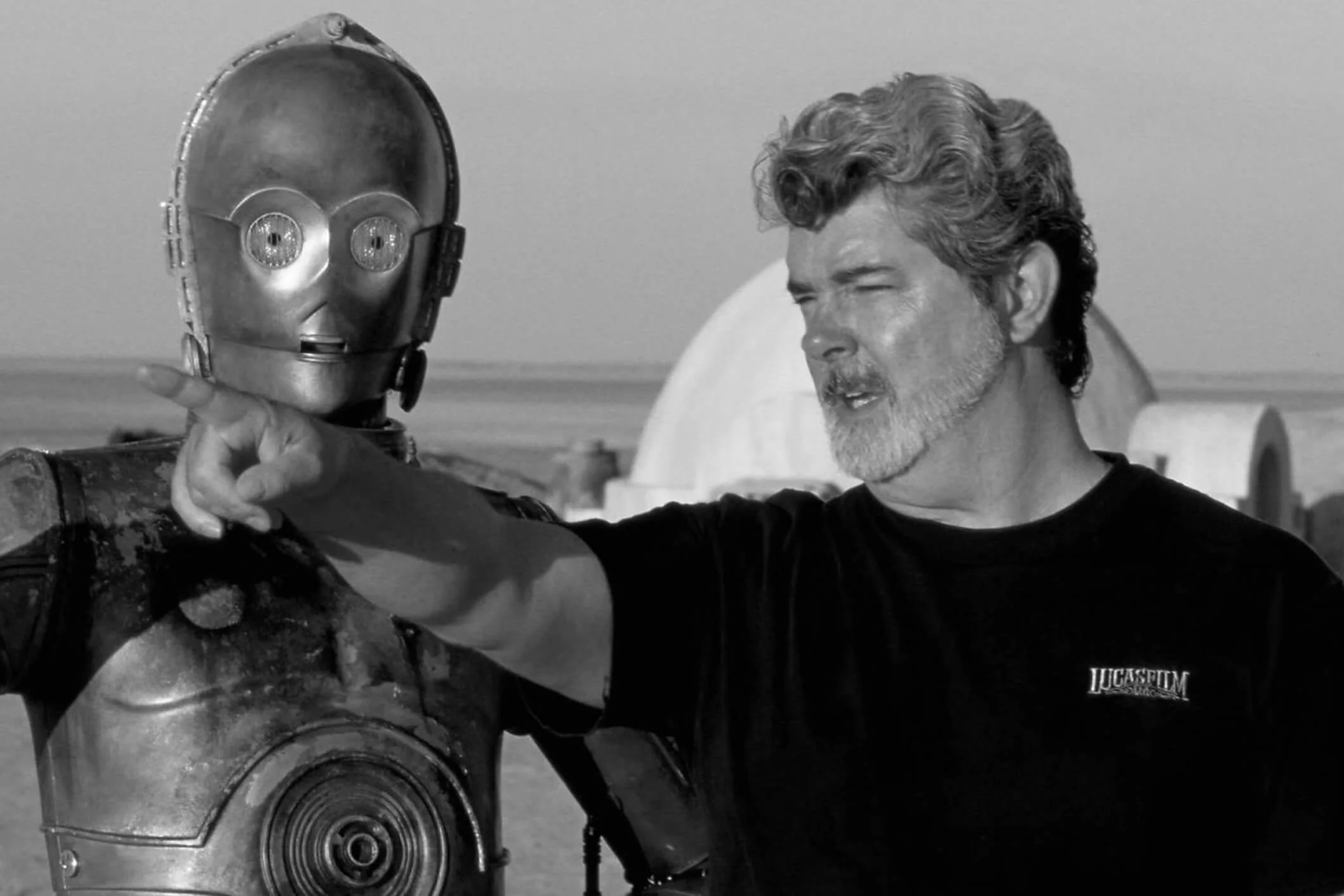
George Lucas, Founder and Former CEO of Lucasfilm
The transaction delivered extraordinary financial returns for both parties. However, it also delivered something Lucas had not foreseen: the pain of watching strangers dismantle the creative vision he had spent a lifetime constructing. Despite the aid of sophisticated lawyers, top-tier M&A advisors, and seasoned business leaders, Lucas saw his legacy wiped out.
His public expressions of seller’s remorse offer a warning story for all conscious business leaders.
A Financial Empire, a Rebel Spirit, and a Global Cultural Force
George Lucas initially studied anthropology, sociology, and literature before a near-fatal car accident ended his racing ambitions and redirected his focus toward filmmaking. In 1969, he co-founded American Zoetrope with Francis Ford Coppola in San Francisco, aiming to foster independent filmmaking outside the constraints of Hollywood. His first movie THX 1138 was distributed by Warner Bros, but the studio heavily edited the film against Lucas's wishes. Disillusioned by this loss of creative control, he founded Lucasfilm in 1971 to ensure independence and prevent any studio from dictating the final cut of his work again.
In 1973, American Graffiti was produced for just $777,000 and grossed roughly $140 million worldwide. In 1977, Lucas directed Star Wars: A New Hope, produced for $11 million. It became the highest-grossing film of its time, generating $775 million worldwide during its original run and re-releases (approximately $3.5 billion in 2026, adjusted for inflation).
Crucially, Lucas made decisions that changed the entertainment industry. He took a reduced director’s fee in exchange for merchandising and sequel rights. Distributor 20th Century Fox had undervalued these assets, and this decision created the modern franchise model. Toy company Kenner sold more than 300 million Star Wars action figures from 1978 to 1985 alone. Lucas also established multiple subsidiaries: Industrial Light & Magic (ILM) for visual effects, Skywalker Sound for audio standards (the creator of the THX System), and the Lucasfilm Computer Division (sold to Steve Jobs in 1986, becoming Pixar). By 2012, Lucasfilm employed about 2,000 people, and the Star Wars brand had generated an estimated $27 billion in lifetime franchise revenue, with merchandise accounting for the majority.
Beyond finances, Star Wars also had a major impact on global culture. It revived the space opera genre, elevating it from pulp science fiction to epic galaxy-spanning storytelling. Its narrative core lies in Joseph Campbell's universal template of departure, initiation, and return from the book The Hero with a Thousand Faces (the journey from farm boy to Jedi hero), alongside Arthurian chivalric codes (the Jedi as knight-monks) and the Bushido samurai code (ethos of loyalty, discipline, and moral integrity). It draws from the Taoist principle of the Tao (the flow of universal energy), Buddhist doctrine (fear leads to anger, anger to hate, and hate to suffering), and Christian themes (redemption and sacrifice). It also drew inspiration from Akira Kurosawa’s samurai films, especially The Hidden Fortress (with its fleeing princess, peasant perspectives, and comic duo dynamics). Secondary reflections include Zoroastrianism (dualism of light and dark) and Gnosticism (the emphasis on spirit over physical form).
This synthesis gave Star Wars a depth and trans-generational resonance that pure spectacle could never achieve. By 2012, the 501st Legion, a global organization of costumed volunteers, had grown to over 10,000 members, and the franchise had become embedded in global consciousness, with the phrase "May the Force be with you" entering the everyday lexicon.
Exit Rationale, Deal Structure, and Integration
At 68, planning to remarry and expecting a baby, Lucas sought retirement to focus on family, philanthropy, and experimental films. He publicly declared it was time to pass Star Wars on to a new generation of filmmakers. With no heirs involved in the business, selling was his chosen path to succession.
He selected Disney, a global media conglomerate with over $42 billion in annual revenue, under the leadership of CEO Robert Iger. Disney had successfully acquired Pixar ($7.4 billion, 2006) and Marvel ($4 billion, 2009). Lucas, conscious of his legacy, viewed Disney’s family-friendly ethos and worldwide presence as aligned with the Star Wars themes of heroism and moral clarity. Iger personally courted Lucas over 18 months to build trust.
The transaction valued Lucasfilm at $4 billion (an implied 10x normalized historical EBITDA). Lucas received approximately half in cash and half in Disney shares. Crucially, as part of the deal, Lucas handpicked his successor, Kathleen Kennedy, was named a "creative consultant," and provided detailed story treatments for the next trilogy he had been developing. Post-closing, Disney integrated Lucasfilm into its studios division, theoretically granting it operational autonomy similar to Pixar.
Early Financial Wins but Cultural Turmoil
Financially, the acquisition was initially a triumph. The sequel trilogy and spinoffs grossed approximately $6 billion worldwide. Streaming successes like The Mandalorian and theme park expansions like Galaxy’s Edge drove significant revenue. Lucas personally benefited enormously as his Disney shares appreciated, reaching $7 billion in 2021.
However, beneath these aggregate numbers, the trajectory told a different story.
Creatively, the sequel trilogy was criticized for lacking the unified vision Lucas had provided for the previous six films. Box office returns declined with each installment: $2.07 billion (The Force Awakens), $1.33 billion (The Last Jedi), and $1.07 billion (The Rise of Skywalker). Solo: A Star Wars Story became the first Star Wars film to lose money (estimated $77 million loss). Furthermore, the Galactic Starcruiser immersive hotel opened in 2022 only to close 19 months later.
Friction between Disney and Lucas began immediately. According to Bob Iger’s memoir, The Ride of a Lifetime (2019), the creative team for Episode VII opted not to use Lucas’s submitted story treatments. Disney had purchased the stories but was not contractually required to film them.
Lucas felt betrayed, later describing the sale in a 2015 interview with Charlie Rose as “selling his kids to the white slavers”, which revealed the depth of his anguish. In a 2020 conversation with Paul Duncan, he described the process as “very, very painful,” like a breakup or “handing your kids over to the wrong people”. Lucas realized that while he understood the legal reality of the contract, he had believed the purchase came with a tacit promise of stewardship that was ultimately broken.
Reflections for Business Leaders
What made Lucasfilm successful was its operation under Lucas’s singular creative control, which enabled the production of its distinctive IP. As a privately held company with Lucas as sole shareholder, it was insulated from short-term public-market pressures. Every decision flowed through one vision.
The M&A deal with Disney exposed a classic tension in founder exits: the moment a unique creative asset enters the hands of a public company structured for scale and shareholder returns. Clayton Christensen’s Harvard Business Review framework distinguishes “Leverage My Business Model” acquisitions (integrating resources into existing operations for efficiency) from “Reinvent My Business Model” acquisitions (preserving a unique culture or creative engine). Lucasfilm was the latter, its value resided in Lucas’s irreplicable vision. Disney acquired it as a Reinvent asset but, under shareholder-value pressures, treated it as a Leverage asset, accelerating production and replacing coherence with committee-driven output. One creator's coherent mythological vision had been replaced by a committee-driven production model optimized for quarterly content output.
George Lucas received a massive fortune but watched the meaning of his life's work recede. His experience is the archetype of seller's remorse, which affects an estimated 75% of founders within a year of their exit. The regret was not about the money, but about the realization that the process treated the company he founded as a financial asset to be optimized rather than a mission to be upheld.
The nature of the buyer matters. Disney was not a predatory acquirer. It was a sophisticated, well-resourced entertainment conglomerate that genuinely admired the franchise. The problem was structural: a publicly traded company operating under the doctrine of Friedman’s shareholder value maximization will, inevitably, optimize for financial throughput over artistic DNA. For a founder whose legacy depends on creative integrity, that structural reality is the risk, regardless of how much goodwill exists at the signing table.
For business leaders who have built something meaningful, Lucas’s story poses the essential question: Was the M&A transaction process designed as an exit or a succession? An exit maximizes the check. A succession preserves your life’s work. And years later, you can observe that what you built still reflects the values that made it matter in the first place, and continues to strive in the right hands. By that measure, one of the most financially successful entertainment M&A deals also became one of its most instructive failures in stewardship.
—
Amine Laouedj Managing Director, Glenshore
I advise responsible business leaders who wish to ensure their company ends up in the right hands and continues to flourish after their exit. If these perspectives resonate with your thoughts, I welcome a conversation. Please connect or message me on LinkedIn.
Glenshore is a boutique investment bank with the Succession M&A Playbook, a disciplined approach to align financial outcomes with long-term mission and legacy preservation. Learn more at glenshore.com.